Best Business to Start in Ghana With Low Capital in 2026
The low-capital businesses actually working in Ghana right now, what each needs, and the real registration and tax costs most lists skip over.

In this guide▾
- Quick facts: what formalising a business costs in Ghana
- Freelance and remote digital services
- Mobile money and fintech agency work
- Reselling and trading on WhatsApp and social media
- Food vending, chop bars and home catering
- Tailoring and fashion alterations
- Small-scale poultry
- Cleaning, laundry and domestic services
- Once you're earning: tax and staff basics
- Mistakes that cost new business owners money
- Frequently asked questions
The lowest-capital businesses actually working in Ghana right now are services you run from a phone (writing, social media management, bookkeeping, mobile money agency) and small-scale trading, not the production businesses, like poultry or sachet water, that most "start with GH₵500" lists gloss over. Before you spend a cedi on stock, know the real formal costs: registering a business name at the Office of the Registrar of Companies (ORC) is GH₵130, and a limited company is GH₵585 plus 1% capital duty on whatever capital you declare.
Below are nine businesses people are actually running in Accra, Kumasi and smaller towns in 2026, what each genuinely needs, and where the viral low-capital lists get the numbers wrong.
Quick facts: what formalising a business costs in Ghana
| Register a business name (sole proprietorship) | GH₵130 at the ORC, plus GH₵70/year renewal |
| Register a limited company | GH₵585 + 1% capital duty on stated capital |
| Your TIN | Automatic: your Ghana Card PIN doubles as your TIN |
| VAT registration threshold (goods) | GH₵750,000 a year, raised from GH₵200,000 from 1 January 2026 |
| VAT registration threshold (services) | None. Service businesses can be liable from the first cedi of turnover |
| If you hire staff: SSNIT | 13% from the employer, 5.5% from the worker, paid within 14 days of the following month |
Source: ORC fee schedule via SwiftPesa's registration guide and SwiftPesa's Ghana VAT guide, both checked against GRA and ORC sources in October 2026; SSNIT contribution guide.
Freelance and remote digital services
This is the lowest-capital option on this list: a smartphone or laptop, a data bundle, and a skill someone abroad or in Accra will pay for. Social media management, bookkeeping, transcription, copywriting, graphic design and virtual assistance all fall here.
The real cost isn't equipment, it's getting paid. PayPal doesn't support Ghanaian accounts for receiving money directly, so most freelancers route payments through workarounds covered in our guide or platforms that pay out to mobile money and Ghanaian bank accounts directly.
Who it suits: anyone with a marketable skill and decent internet, especially people already working a job who want a side income before going full-time.
Mobile money and fintech agency work
Agency work for MTN MoMo, Telecel Cash or AirtelTigo Money is one of the most common entry businesses into trading in Ghana, because it brings in daily commission on cash-in and cash-out transactions and foot traffic for a shop you can stock with other goods.
Don't trust a specific capital figure you see quoted online for this: the networks set and change their own minimum float and application requirements, and we could not confirm a current figure from MTN, Telecel or AirtelTigo's own channels this month. Apply directly through the network's agent desk or an existing aggregator (Zeepay, ExpressPay, Hubtel and others run sub-agent networks with lower entry points than becoming a direct agent) and get the current minimum float and commission structure in writing before you commit money.
Who it suits: people with a fixed shop location (wooden kiosks and umbrella stands don't usually qualify) and enough working capital to avoid running out of float mid-day.
Reselling and trading on WhatsApp and social media
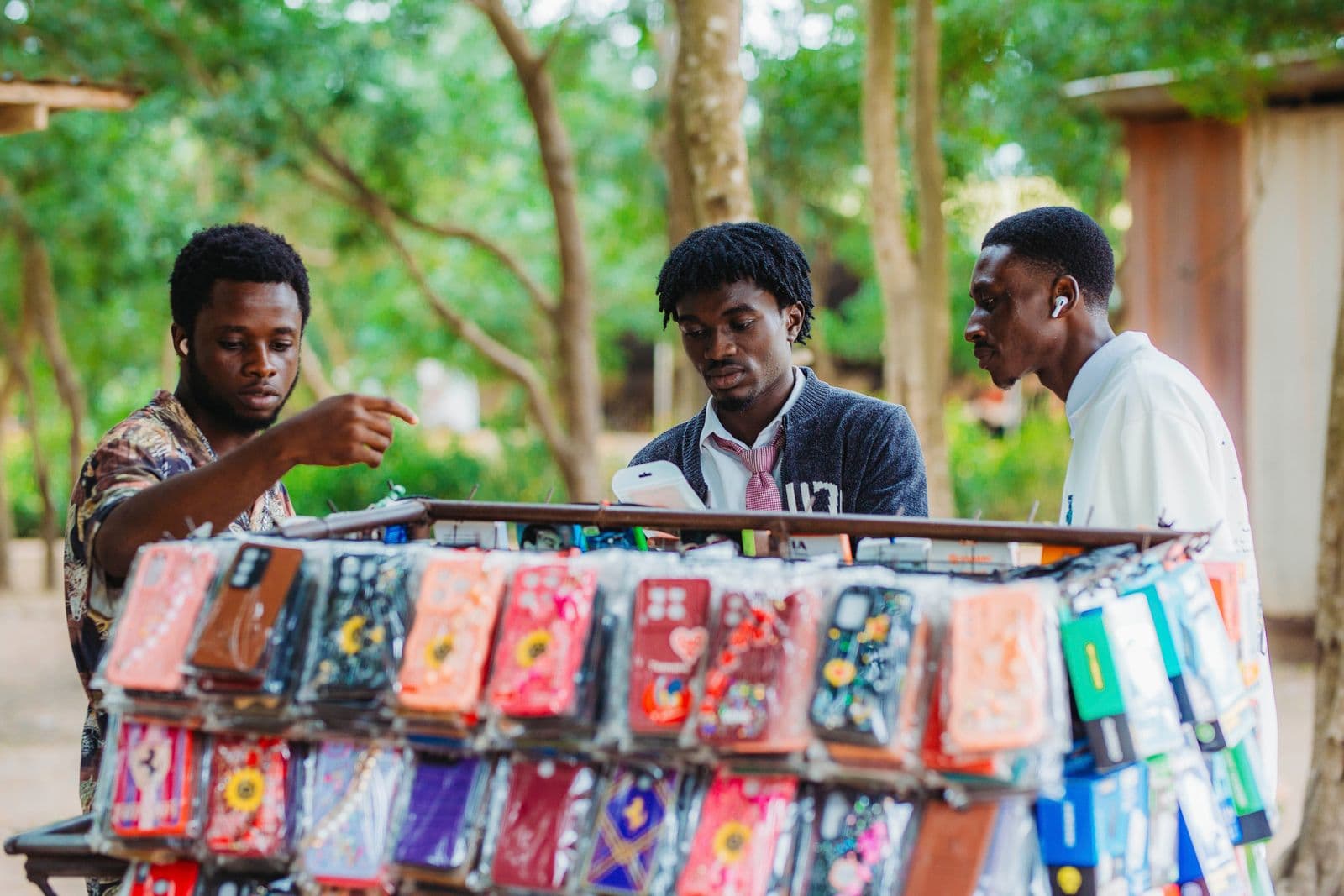
Buying in bulk and reselling in smaller units, cosmetics, phone accessories, kids' clothes, snacks, is one of the oldest low-capital trades in Ghana, now mostly run through WhatsApp Business and Instagram rather than a physical stall.
Capital here is genuinely flexible: you can start with a few hundred cedis of stock bought from Makola, Kantamanto or Suame and scale as sales pick up. The catch is quality control, especially with second-hand clothing bales: retailers buy bales sight-unseen, and research cited by the Graphic puts roughly 40% of a typical bale as unsellable. Negotiate to inspect part of a bale before buying, and buy from a few different dealers before settling on one.
Who it suits: people with time to manage orders and deliveries and an eye for what's actually selling in their area, not just what's cheap to source.
Food vending, chop bars and home catering
Food is one of the most reliable low-capital businesses because demand never disappears, but it's also the one most lists understate on compliance. If you're producing or packaging food to sell (not just cooking one dish to order), the Food and Drugs Authority (FDA) requires product or premises registration, and the fee depends on your product category and scale. Check the current fee on the FDA's own fee schedule before you budget; published figures for small-scale registration have ranged quite a bit between sources this year, so don't rely on a number you saw on a blog. You'll also need clearance from your local Metropolitan, Municipal or District Assembly for the premises itself.
Who it suits: good cooks willing to handle the paperwork; chop bars and home catering for offices and events both work, but events pay better per job if you can handle the volume.
Tailoring and fashion alterations
A sewing machine, basic tools and fabric is the core setup, and skilled tailors who can do alterations as well as new garments stay busiest, since alteration work needs far less capital per job than making from scratch. Machine prices vary widely by brand (manual, electric or computerised) and condition, so price a few at Suame or a sewing-machine dealer near you rather than go on a number from an old blog post.
Who it suits: anyone with tailoring training already. This isn't a business to learn from zero without an apprenticeship first; a structured apprenticeship with an established tailor is still the standard route in.
Small-scale poultry
Broiler and layer farming is a genuine low-to-medium capital business, scalable from a small backyard batch upward, but the two costs that make or break it, day-old chicks and feed, move with global grain prices and local supply, and we couldn't confirm a reliable current GH₵ figure for either from a primary source this month. The Greater Accra Poultry Farmers Association and your nearest feed mill or hatchery will give you today's price; don't plan a batch around a number from a 2026 cost guide you found online, because feed costs especially have been volatile.
Start with a small batch (farmers commonly test with a few hundred birds before scaling) so a bad batch doesn't wipe out your capital. Ghana still imports far more chicken than it produces domestically, and a 100% tariff on imported frozen chicken introduced in October 2022 exists precisely because local farmers struggle to compete with it, so sell live or fresh-dressed birds directly to chop bars, households and markets rather than trying to compete on frozen retail price.
Who it suits: people with land or yard space and patience for a 6 to 8 week broiler cycle before the first payout.
Cleaning, laundry and domestic services
Office cleaning, laundry pickup-and-delivery and home-help placement all need more labour than capital to start. A manual setup (buckets, detergent, an iron, a bicycle or motorbike for pickups) costs far less than investing in washing machines and a shopfront from day one; most laundry operators who start small graduate to machines once they have a client base that justifies the cost.
Who it suits: anyone who can manage reliability and trust, since repeat clients are what make this profitable, not one-off jobs.
Once you're earning: tax and staff basics
Most of these businesses stay informal for a while, but two things catch people out once money starts moving. First, if you take on even one employee, you have to register them for SSNIT and deduct PAYE where it applies, run the numbers through our Ghana PAYE calculator before you quote someone a salary so you both know what actually lands in their pocket. Second, keep basic records from day one; it's far easier to prove your income (to a bank for a loan, or to GRA) if you've been tracking it than to reconstruct a year of sales from memory.
Mistakes that cost new business owners money
Trusting a specific capital number from a paid ebook or blog post. Several widely shared Ghana business lists promise you can register a company and start trading for under a thousand cedis. A limited company alone costs GH₵585 plus 1% capital duty before you've bought anything to sell, and most of the per-business capital figures circulating online aren't sourced to anyone who actually checked current prices.
Skipping FDA or Assembly registration for a food business. Selling without the right registration isn't just a fine risk, if an environmental health officer shuts you down mid-week, you lose the stock and the goodwill you built with customers.
Assuming service businesses are too small to register for VAT. Since the threshold for services was removed, don't assume you're exempt just because your goods turnover is low; check the rules for your specific service with GRA.
Buying stock from one unverified wholesaler. Whether it's a clothing bale, a batch of day-old chicks or a bulk phone-accessory order, buying from a single untested supplier means you absorb all the risk if the batch is bad. Spread your first few orders across at least two sources.
Not separating business and personal money from day one, even as a sole proprietor with no formal company account. It's the single most common reason new traders can't tell if they're actually making a profit.
Frequently asked questions
Can I start a business in Ghana with no capital at all?
Not entirely, but freelance digital services come close: if you already own a smartphone and have data, your only ongoing cost is airtime or data bundles until you land your first paying client. Every other business on this list needs at least some stock, equipment or float money.
Do I need to register my business before I start selling?
Legally, yes, once you're trading regularly rather than doing a one-off favour for a friend. A business name at the ORC costs GH₵130 and takes a visit to an ORC counter even though you can search and reserve the name online. Many small traders operate informally for a while, but you can't open a business bank account, bid for most contracts, or register for tax properly without it.
How much does it cost to become a mobile money agent in Ghana?
The networks don't publish a single current figure, and reported minimum float amounts vary depending on who you ask and which platform you apply through. Ask MTN, Telecel or AirtelTigo's own agent desk, or an aggregator like Zeepay or Hubtel if you want a lower-capital sub-agent route, and get their current float and commission terms in writing before paying anything.
Which low-capital business makes the most money in Ghana?
There's no verified earnings data for any of these, so be sceptical of anyone who quotes you a specific monthly income. In practice, freelance digital services and mobile money agency tend to have the fastest route to steady income because they don't depend on perishable stock, while food and poultry pay well but carry more risk from spoilage and price swings in chicks and feed.
Do I need a TIN to start a small business?
If you're an individual, your Ghana Card PIN is already your TIN under the Ghana Revenue Authority's system, so there's nothing extra to apply for; see our guide on checking or retrieving your TIN if you're not sure yours is active. A registered company gets a separate TIN when it's incorporated.
What happens if I don't register my business for VAT when I should?
For a service business, there's no turnover threshold to hide behind the way goods businesses can below GH₵750,000 a year, so check your obligation with GRA directly rather than assuming you're too small. Trading without registering when you're required to can mean penalties and interest once GRA catches up with you, on top of the VAT itself.
Keep reading
How to Register a Business in Ghana: ORC Costs, Steps and Timeline
Registering a business name in Ghana costs GHS 130 at the ORC, and a company GHS 585 plus 1% capital duty. See the steps, timeline and what's still done in person.
14 Oct 2026 · 7 min read
The Best Businesses to Start in Uganda With Low Capital (2026)
Starting a business in Uganda does not need millions. See what mobile money, boda boda, poultry and other low-capital businesses really cost to start in 2026.
31 Oct 2026 · 9 min read
Best Business to Start in Tanzania in 2026: 6 Ideas With Real Costs
Six small businesses you can realistically start in Tanzania in 2026, with registration costs, 2026 tax changes and who the law now reserves them for.
30 Oct 2026 · 9 min read