How to Start a POS Business in Nigeria: Real Costs, Terminals and Profit
A POS agent business in Nigeria now costs at least ₦30,000–₦120,000 upfront, and CBN's new one-principal rule changed the maths. Checked October 2026.

In this guide▾
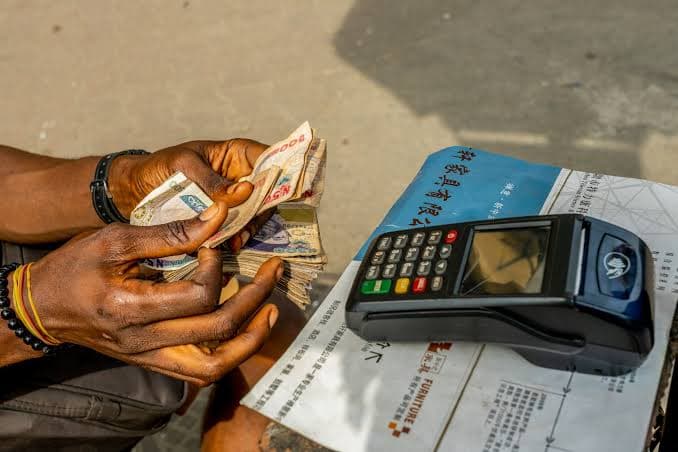
Starting a POS agent business in Nigeria now costs at least ₦30,000 to ₦120,000 upfront — a business name registration (₦10,500), a terminal (₦21,500 for an entry-level machine, up to ₦85,000 for a smart Android one), and whatever float you can add on top. That's before you've opened for a single customer. On top of the capital, the Central Bank of Nigeria's October 2025 agent banking guidelines have changed the business itself: since 1 April 2026, every agent must work with one principal institution only, no more running Moniepoint, OPay and PalmPay terminals side by side to catch whichever network is working. Here's what it actually takes to start, and what agents are really taking home, checked October 2026.
How much capital do you actually need?
There's no single official "cost to start a POS business" figure, because the three big fintechs — Moniepoint, OPay and PalmPay — don't price their terminals the same way, and none has published a fixed float minimum. But three real, sourced costs stack up before you process your first transaction:
| Cost | Amount (₦) | Notes |
|---|---|---|
| CAC business name reservation | 500 | Valid 60 days |
| CAC business name registration | 10,000 | Needed to open an agent account with most providers |
| Entry-level POS terminal | 21,500 | Up from ₦15,000–20,000 in 2023 |
| Smart/Android POS terminal | 62,000–85,000 | Up from ₦30,000–40,000 in 2023 |
| Float | Not fixed | Budget at least as much as your biggest expected single withdrawal |
Terminal prices jumped 30–100% between 2023 and 2025 because every POS terminal sold in Nigeria is imported, and the naira fell from around ₦500/$ in early 2023 to roughly ₦1,500/$ by 2025 (Nairametrics, September 2025, checked October 2026).
Registering a business name with CAC costs ₦21,000 in government fees as of October 2026 — see our full CAC registration cost breakdown, including the limited company option, for the current figures. You don't strictly need a registered business to pick up a terminal from an aggregator on the street, but Moniepoint, OPay and PalmPay all ask for it on their formal agent application, alongside a valid BVN and NIN.
On float: unlike, say, MTN Uganda, none of the three big Nigerian fintechs publishes a minimum float requirement on its site. Treat the terminal cost above as a floor, not your whole budget — if your first customer wants to withdraw ₦20,000 and you've only got ₦21,500 to your name, you're done for the day.
Moniepoint, OPay or PalmPay: how do you actually sign up?
All three let you apply online or through an aggregator in your area, and none charges an application fee. What differs is the terminal model:
- Moniepoint leases rather than sells its terminal. Reported costs run around ₦21,500, split between a caution (refundable) deposit, a logistics fee and a year of device insurance.
- OPay offers a tiered lineup from a basic mini-POS up to an Android smart terminal, with the smart models running into the ₦60,000–₦85,000 range reported above.
- PalmPay also runs a caution-deposit model, with a higher deposit for its newer Android terminal than its standard device.
None of the three publishes a single, dated, official price list on its public website — the figure you're quoted depends on the terminal model, your aggregator and when you ask. Get the exact current number from the app or your assigned aggregator before you pay anything, and never buy a "ready-registered" terminal from a reseller or marketplace: if it's flagged for fraud by its original owner, you can lose access to a till holding your customers' money.
The CBN rule that changed the POS business in 2026
This is the part most older "how to start a POS business" guides don't mention, and it matters more than the terminal price. On 6 October 2025, the CBN issued its Guidelines for the Operations of Agent Banking in Nigeria (circular PSP/DIR/CON/CWO/001/049). Most of it took effect immediately; two provisions had a grace period to 1 April 2026, which has now passed:
- One principal only. Every agent — including POS operators — must now affiliate exclusively with a single bank, mobile money operator, microfinance bank or licensed super-agent. The old practice of running terminals from two or three providers to dodge network failures or card declines is over (TechCabal, October 2025, checked October 2026).
- Geo-fencing. Terminals must be registered and locked to one physical location. Moving your machine to a new spot needs your principal's prior approval and 30 days' notice to customers.
- A ₦1.2 million daily cash-out cap per agent. Whatever your volume, your principal institution won't let you pay out more than that in a day.
- Customer-level limits too: CBN caps what an individual customer can move through an agent at ₦100,000 a day and ₦500,000 a week for both deposits and withdrawals (BusinessDay, October 2025, checked October 2026).
Practically, this means: pick the provider you want to work with before you buy a terminal, because switching later means re-registering your location and re-applying rather than just adding a second machine. If you were planning to run a busy corner with two or three brands' terminals to maximise throughput, that plan no longer works.
Separately, a ₦50 stamp duty (replacing the old Electronic Money Transfer Levy) now applies to every transfer of ₦10,000 or more, charged to the sender, under the Nigeria Tax Act 2025 effective 1 January 2026. Transfers between your own matching-name accounts are exempt (BusinessAM, checked October 2026). It isn't a POS-specific charge, but it shows up in the fee your customer sees on every transfer you process for them.
What do agents actually charge, and what do they keep?
Charges aren't fixed by any of the three providers — agents set their own customer-facing price, within what the app allows. Reporting from Lagos in mid-2025 found typical charges of ₦100–150 to withdraw ₦5,000, around ₦250 for ₦10,000, and ₦400–500 for ₦20,000, rising with the amount withdrawn (TechCabal, June 2025, checked October 2026).
What the agent keeps from that is harder to pin down, because none of the three publishes its agent commission schedule publicly, and agents who've compared platforms report real differences. Per that same reporting:
- Moniepoint and PalmPay agents describe keeping roughly ₦5–10 for every ₦1,000 processed, with multiple agents saying Moniepoint deducts more on the back end than PalmPay.
- OPay uses a volume-based model — the more you process, the lower the effective charge over time.
Is this actually profitable? A realistic picture
There's no official record of what POS agents earn — the CBN doesn't publish it, and neither does any provider. The most detailed on-the-ground reporting available, from TechCabal's conversations with Lagos agents in mid-2025, gives a useful range rather than a single number:
- A quiet side-street stand processes 10–20 transactions a day; a stand on a busy intersection sees 50–70.
- At typical charges, that worked out to roughly ₦3,000–12,000 in gross daily income, or about ₦90,000–360,000 a month, before costs.
- Running costs bite hard: agents reported spending up to ₦30,000 a month on mobile data to keep terminals connected, and up to ₦25,000 a month on transport to source cash from multiple bank branches once weekly withdrawal limits kick in. One agent with a shop (rent, light, a helper) said he was left with just ₦15,000–20,000 a month after everything. If you take on paid help once you add a second terminal, their wages are liable to PAYE above Nigeria’s tax-free threshold — run the numbers with our Nigeria PAYE tax calculator before you fix a salary.
So treat "POS business" as a high-turnover, thin-margin retail business, not passive income. A well-placed stand with 50+ transactions a day in a market or busy junction can genuinely clear six figures a month gross; a quiet residential corner may barely cover your data and transport. Location is the single biggest driver of whether this works.
Nigeria's POS network isn't small: terminals processed roughly ₦18.78 trillion in Q1 2026 alone, a 79% jump on Q1 2025, across millions of deployed devices. There's real demand — the question is whether your specific spot gets enough of it.
What to watch out for
- Fraudulent transfers. Agents report customers showing fake debit alerts, or exploiting network delays so a transaction looks "approved" on the terminal but the money never lands, or reverses minutes later without the agent noticing. Confirm the credit in your own account balance, not just the terminal screen, before handing over cash.
- Cash security. Carrying and storing physical cash is the real risk in this business — agents interviewed by TechCabal described being targeted for robbery and now split cash across multiple hiding places rather than keeping it all on the stand.
- Reseller terminals. Buying a "pre-registered" terminal from someone other than the provider or its official aggregator risks losing access the moment the real owner disputes it.
- Ignoring the one-principal rule. Running unregistered side terminals from a second provider after April 2026 puts both your agent status and your customers' money at risk if it's flagged.
Before you commit capital, make sure your personal paperwork is in order: you'll need your BVN and NIN for agent KYC, and a Tax ID (TIN) once you're registering as a business. If you're also trying to work out what the new transfer levy means for your own bills, see our breakdown of Nigeria's new tax laws. For more on running a business day to day in Nigeria, see our Nigeria hub.
Frequently asked questions
How much money do I need to start a POS business in Nigeria?
Budget at least ₦30,000–₦120,000 to get going: roughly ₦10,500 to register a business name with CAC, ₦21,500–₦85,000 for a terminal depending on the model, plus whatever float you can add. None of the big three providers publishes a fixed minimum float, so treat this as a starting floor, not your full budget.
Can I still run Moniepoint, OPay and PalmPay terminals together?
No. Since 1 April 2026, CBN's agent banking guidelines require every agent to work with a single principal institution. The old practice of keeping two or three providers' terminals to dodge network issues or card declines is no longer allowed.
Which is better: Moniepoint, OPay or PalmPay for a POS business?
Each has a different terminal-acquisition model (lease-style caution deposits for Moniepoint and PalmPay, a wider device lineup for OPay) and agents report real differences in how much of each transaction they keep. None publishes its full commission schedule, so ask your local aggregator for the current terms for your specific location before committing — and remember you can now only pick one.
How much can a POS agent actually make in a day?
There's no official figure. Reporting from Lagos agents in 2025 suggests daily gross income of roughly ₦3,000–12,000 depending on footfall, location and transaction size, with data, transport and rent eating a large chunk of that. A busy junction stand can clear six figures a month gross; a quiet corner may only cover its own running costs.
Do I need to register my business with CAC before starting?
Most formal agent applications with Moniepoint, OPay and PalmPay ask for a registered business name, which costs about ₦10,500 all in (₦500 reservation plus ₦10,000 registration) as of late 2025. You can sometimes get a terminal through an informal aggregator without it, but you won't be able to open bank-linked settlement accounts properly without one.
What changed for POS agents under the new CBN rules?
Since the CBN's October 2025 guidelines took full effect, agents must work with one principal institution, keep their terminal geo-fenced to a single registered location, and stay under a ₦1.2 million daily cash-out cap. Customers are also capped at ₦100,000 a day and ₦500,000 a week through any one agent.
Keep reading
Broiler Feed Formulation: Starter and Finisher Feed for Kenya and Nigeria
What goes into balanced broiler starter and finisher feed from Kenyan and Nigerian ingredients, the protein, energy and amino acids broilers need, why broiler feed needs oil, and whether home mixing saves.
20 Oct 2026 · 4 min read

CAC Registration Cost in Nigeria (2026): Business Name vs Limited Company, Step by Step
What CAC registration actually costs in Nigeria: ₦21,000 for a business name, from ₦11,750 for a limited company, with the steps, checked October 2026.
14 Oct 2026 · 9 min read
Pig Feed Formulation in Kenya: Creep, Weaner, Grower and Finisher Feed
What goes into balanced pig feed at every stage (creep, weaner, grower, finisher and sows) from Kenyan ingredients, what pigs need at each stage, how much they eat, and whether home mixing pays.
20 Oct 2026 · 4 min read