Broiler Feed Formulation: Starter and Finisher Feed for Kenya and Nigeria
What goes into balanced broiler starter and finisher feed from Kenyan and Nigerian ingredients, the protein, energy and amino acids broilers need, why broiler feed needs oil, and whether home mixing saves.

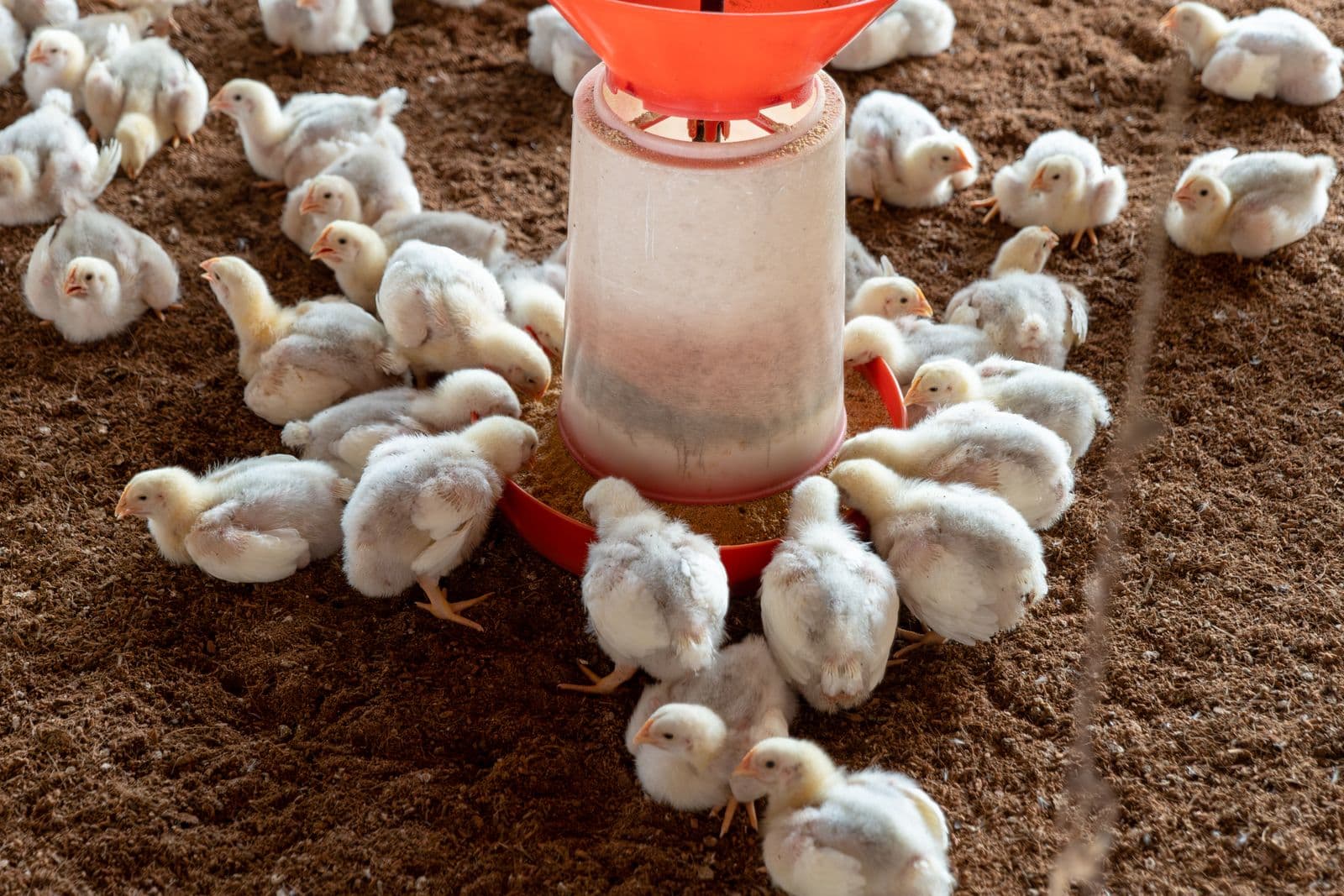
In this guide▾
A balanced home-made broiler starter (weeks 0–3) needs about 21–23% crude protein and at least 2,900 kcal/kg of energy; a broiler finisher (week 3 to sale) needs about 18–20% protein and at least 3,000 kcal/kg. With Kenyan ingredients, both are built on ground maize and soybean meal, with omena and a little vegetable oil, plus small amounts of DCP, lime, salt, methionine and premix.
Broilers grow so fast that a feed short on protein, lysine or energy shows up in your weights within days. Our broiler feed formulation calculator works out the cheapest balanced starter or finisher from the ingredients you can buy; the exact recipe and PDF unlock with M-Pesa.
What broilers need
| Starter (0–3 weeks) | Finisher (3 weeks to sale) | |
|---|---|---|
| Energy | 2,900–3,150 kcal/kg | 3,000–3,200 kcal/kg |
| Crude protein | 21–24% | 18–21% |
| Lysine | at least 1.15% | at least 1.0% |
| Methionine | at least 0.48% | at least 0.40% |
| Calcium | 0.9–1.1% | 0.75–1.0% |
| Available phosphorus | at least 0.45% | at least 0.36% |
Energy and protein follow the Cobb500 broiler nutrition supplement (2022); amino acids use the NRC (1994) poultry requirements, which are easier to reach with home ingredients than the breed company's digestible-amino-acid targets.
Broiler starter (0–3 weeks)
In Kenya, maize carries a little over half the bag and soybean meal most of the rest, with omena and vegetable oil topping up protein and energy. Starter needs noticeably more soybean meal than finisher, which is why it costs more.
In Nigeria, groundnut cake and wheat offal can take over part of the soybean meal's job, and more oil is usually needed. The cheapest balance in naira depends on your local prices.
Broiler finisher (3 weeks to market)
Finisher shifts the bag towards maize for energy and cuts the soybean meal back. A pinch of feed-grade lysine often lets you use less soya without slowing growth. The calculator works out where that trade-off lands at your prices.
Why broiler feed needs oil
Broilers need far more energy per kilo than layers. Maize, soybean meal and omena alone usually fall a few percent short of the 2,900–3,000 kcal/kg broilers need, which is why commercial broiler feeds contain added fat. A little vegetable oil (cooking oil, or crude palm oil in West Africa) closes the gap: only a small share of the bag in Kenya, a bit more where soybean meal is pricier. Use fresh oil; rancid oil does more harm than good.
The other usual gap is methionine. Without feed-grade methionine from the agrovet, most home broiler mixes fall 20–25% short, and growth slows.
How much feed does a broiler eat?
About 50 g a day on average over the first three weeks, rising to about 140 g a day in the finishing weeks. 100 broilers eat a 70 kg bag of starter in about two weeks, and a 70 kg bag of finisher in about five days.
Is it cheaper to make your own broiler feed?
Slightly, in Kenya. When we priced balanced starter and finisher mixes at typical Nairobi prices in October 2026, both came in just under the price of commercial broiler feed. The saving grows if you buy maize at harvest or protein at the source. Broilers are where home mixing pays best, because commercial broiler feed is the most expensive bag in the shop. To see what a whole broiler unit earns per batch with your feed and selling prices, try our broiler business plan builder.
What to watch out for
- Don't stretch feed with bran. Broilers can't use much fibre; keep wheat bran and maize bran out of starter.
- Raw soybeans stunt growth. Use soybean meal or properly roasted soya.
- Groundnut cake carries aflatoxin risk. Buy fresh, dry cake, especially in Nigeria and Ghana.
- Change feed gradually from starter to finisher, over 3–4 days.
Frequently asked questions
What is the formula for broiler starter feed?
With Kenyan ingredients: mostly maize and soybean meal, with omena and a little vegetable oil, plus DCP, lime, salt, methionine and premix, balanced to about 21% protein and 2,900 kcal/kg. The exact kilos for your batch and prices are in the calculator.
How much protein is in broiler starter and finisher?
Starter about 21–23% crude protein; finisher about 18–20%.
Can I make broiler feed without soya?
Partly. Fishmeal, roasted full-fat soya, groundnut cake (Nigeria) or black soldier fly larvae can replace some soybean meal, but most balanced broiler mixes still rely on soya for lysine.
When do I switch broilers from starter to finisher?
At about three weeks, over 3–4 days.
Where can I get a broiler feed formulation PDF?
Our poultry feed formulation calculator builds the formula for your own ingredients and prices and gives you a PDF. For egg layers, see our layers mash formula, and for indigenous birds, our kienyeji chicken feed formulation guide.
Keep reading
Pig Feed Formulation in Kenya: Creep, Weaner, Grower and Finisher Feed
What goes into balanced pig feed at every stage (creep, weaner, grower, finisher and sows) from Kenyan ingredients, what pigs need at each stage, how much they eat, and whether home mixing pays.
20 Oct 2026 · 4 min read
How to Make Dairy Meal at Home in Kenya: 16% Mix and Feeding Guide
How to make dairy meal at home: the ingredients for a balanced 16% mix and a high-yielder version, the standards from KALRO and ILRI, and how much to feed per litre of milk.
20 Oct 2026 · 4 min read
Kienyeji Chicken Feed Formulation: A Guide for Growers and Layers
What goes into balanced feed for improved kienyeji chickens (growers and layers) from Kenyan ingredients, the protein they need according to Kenyan research, and how much to feed free-range birds.
20 Oct 2026 · 4 min read