Kienyeji Chicken Feed Formulation: A Guide for Growers and Layers
What goes into balanced feed for improved kienyeji chickens (growers and layers) from Kenyan ingredients, the protein they need according to Kenyan research, and how much to feed free-range birds.

In this guide▾
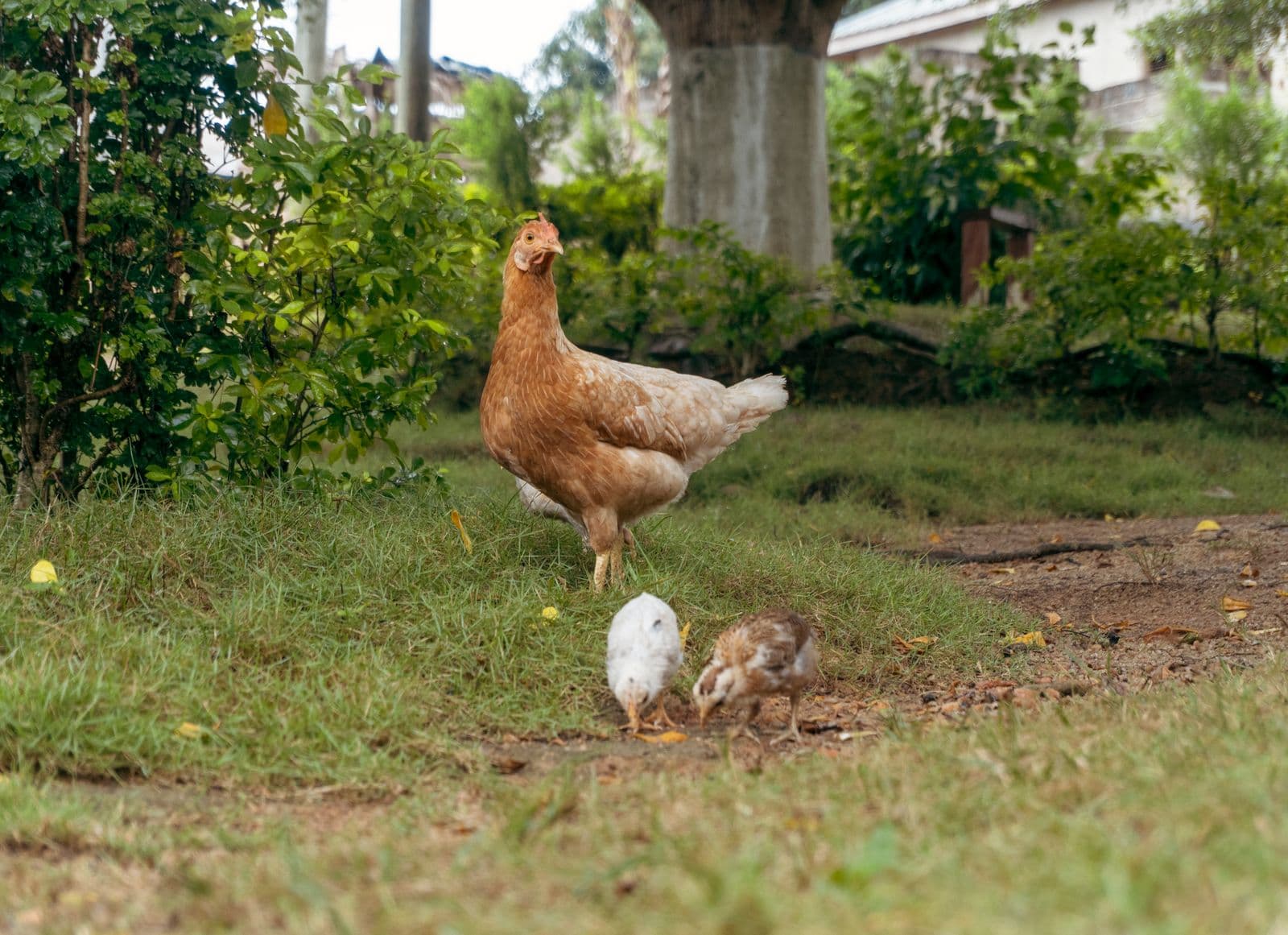
Improved kienyeji chickens (KALRO, Kuroiler, Rainbow Rooster and similar) need about 16% crude protein while growing and about 14–17% once they lay, with 3–4% calcium for laying hens. With Kenyan ingredients, a balanced kienyeji mash is built on maize and wheat pollard, with sunflower cake, a little soybean meal and omena for protein, plus feed lime for layers, salt and premix.
Kienyeji birds need less than commercial hybrids, so a kienyeji mash can lean more on cheaper bran and sunflower cake. Our kienyeji feed formulation calculator works out the cheapest balanced mix from the ingredients you have, for growers or layers; the exact recipe and PDF unlock with M-Pesa.
How much protein do kienyeji chickens need?
Research on indigenous chickens in Kenya by Kingori and colleagues found growing birds (14–21 weeks) needed about 160 g of crude protein per kg of feed (16%): growth and feed intake rose up to that level and then levelled off. Laying indigenous hens needed less, about 120 g/kg. The calculator uses a 14% minimum for kienyeji layers, slightly above that research figure for a margin of safety, plus minimums for lysine, methionine, calcium and phosphorus.
| Kienyeji growers | Kienyeji layers | |
|---|---|---|
| Energy | 2,600–2,900 kcal/kg | 2,600–2,900 kcal/kg |
| Crude protein | 16–18% | 14–17% |
| Calcium | 0.8–1.2% | 3.0–4.0% |
| Crude fibre | at most 8% | at most 8% |
Kienyeji layers feed
Maize makes up about half the bag. Pollard, sunflower cake, soybean meal and omena share most of the rest, and feed lime brings the calcium up for eggshells. Compared with a commercial layers mash, a kienyeji mix uses more pollard and sunflower and less soya, which is where the saving comes from.
Kienyeji growers feed (9–20 weeks)
Growers need protein but almost no extra calcium, so the lime drops to a pinch. Pollard and maize bran can carry a much bigger share of the bag than in a layers mix, with sunflower cake, omena and a little soybean meal for protein. Chicks under 8 weeks need a richer chick mash (about 18% protein): see our layers mash guide.
The kilo-by-kilo recipe for either stage, worked out from your own ingredients and prices, is in the calculator.
Free-range kienyeji: how much to feed
Semi-free-range birds find part of their food: insects, seeds, greens. Plan on about 70 g a day per grower and about 100 g per laying hen of mash, and adjust: if they come home with full crops, give less; in the dry season, give more. Always leave clean water out.
Cheap extras that help kienyeji birds:
- Black soldier fly larvae grown on kitchen waste are an excellent protein; the calculator can include them.
- Greens such as sukuma, amaranth or cabbage leaves add vitamins and keep birds busy.
- Oyster shell or crushed eggshells in a separate tray let layers top up calcium.
Is it cheaper to make your own kienyeji feed?
It depends on your prices. When we priced a balanced kienyeji layers mix at typical Nairobi retail prices in October 2026, it cost more per kilo than a bag of commercial layers mash. Kienyeji farmers save most when they grow their own maize, raise black soldier fly larvae or buy sunflower cake from a local press. Enter your own prices in the calculator and it shows honestly whether your mix beats the bag.
What to watch out for
- Don't feed layers mash to growing birds. Its high calcium damages young birds' kidneys.
- Too much bran or sunflower cake dilutes energy and slows growth. The calculator limits fibre to 8%.
- Mouldy grain or cake carries aflatoxin. Never feed anything musty.
- Kitchen waste is fine as a treat, but it doesn't replace a balanced mash.
Frequently asked questions
What feed is best for kienyeji chickens?
A balanced mash of about 16% protein for growers and 14–17% for layers, made from maize, pollard, sunflower cake and a protein feed such as omena or soybean meal, with feed lime for laying hens.
Can kienyeji chickens eat layers mash?
Laying kienyeji hens can, but commercial layers mash is built for hybrid hens and costs more than kienyeji birds need. Growing birds should never get layers mash.
How do I make kienyeji chicken feed at home?
Weigh out maize, pollard, sunflower cake, omena or soybean meal, feed lime, salt and premix in balanced proportions (the calculator gives the exact kilos), pre-mix the small items into a few kilos of maize, then turn the whole batch on a clean floor.
How much does a kienyeji chicken eat per day?
About 70 g of mash for growers and 100 g for laying hens when they also scavenge; more if they're kept indoors.
Where can I get a kienyeji feed formulation PDF?
Our poultry feed formulation calculator makes the formula for your own ingredients and prices, with a PDF to print or share. For commercial layers, see our layers mash formula.
Keep reading
How to Make Dairy Meal at Home in Kenya: 16% Mix and Feeding Guide
How to make dairy meal at home: the ingredients for a balanced 16% mix and a high-yielder version, the standards from KALRO and ILRI, and how much to feed per litre of milk.
20 Oct 2026 · 4 min read
Layers Mash Formula: How to Make Layers Feed at Home in Kenya
What goes into a balanced layers mash from Kenyan ingredients, the nutrient targets layers need, chick and growers mash, how to mix it, and whether it is cheaper than shop feed.
20 Oct 2026 · 5 min read
Pig Feed Formulation in Kenya: Creep, Weaner, Grower and Finisher Feed
What goes into balanced pig feed at every stage (creep, weaner, grower, finisher and sows) from Kenyan ingredients, what pigs need at each stage, how much they eat, and whether home mixing pays.
20 Oct 2026 · 4 min read