Nigeria's New Tax Laws Explained: What Changed in 2026 for Workers and Small Businesses
Nigeria's Tax Act 2025 took effect 1 Jan 2026: 0% company tax for small firms under ₦50m turnover, VAT stays at 7.5%, new PAYE bands apply. Checked Sept 2026.


In this guide▾
- What actually changed under Nigeria's 2026 tax reform
- Do small businesses pay tax now? The 0% company tax explained
- Two different thresholds — ₦50 million and ₦100 million
- Do small businesses have to charge VAT?
- What's zero-rated and VAT-exempt from 2026
- The 4% Development Levy — is this a new charge on your business?
- What this means for freelancers and side-hustlers
- What to watch out for
- Frequently asked questions
Nigeria's tax system changed on 1 January 2026, when the Nigeria Tax Act (NTA) 2025 and three companion Acts took effect, replacing the old Companies Income Tax Act, Personal Income Tax Act, VAT Act and Capital Gains Tax Act with one unified framework. As of September 2026, the headline numbers are: workers pay no income tax on the first ₦800,000 a year; a "small company" with turnover of ₦50 million or less and fixed assets under ₦250 million pays 0% company income tax; VAT stays at 7.5%, not the 10–15% many people feared; and the Federal Inland Revenue Service (FIRS) is now the Nigeria Revenue Service (NRS). If you run a business or draw a salary in Nigeria, here's exactly what's different and what it means for you.
What actually changed under Nigeria's 2026 tax reform
President Bola Tinubu signed the Nigeria Tax Act, the Nigeria Tax Administration Act, the Nigeria Revenue Service (Establishment) Act and the Joint Revenue Board (Establishment) Act into law on 26 June 2025. The presidency confirmed the two acts that reshape day-to-day tax bills — the NTA and the Tax Administration Act — commenced on 1 January 2026 as planned, after a brief scare in late 2025 that they'd be delayed.
| What | Before | From 1 January 2026 |
|---|---|---|
| Tax-free personal income | Consolidated Relief Allowance (CRA), a formula-based allowance | First ₦800,000 a year, flat |
| Top personal tax rate | 24% (old top PAYE band) | 25%, above ₦50 million a year |
| Small company income tax | 0% under ₦25 million turnover (Finance Act 2021) | 0% under ₦50 million turnover and ₦250 million fixed assets |
| VAT rate | 7.5% | 7.5% (unchanged) |
| Tax authority | Federal Inland Revenue Service (FIRS) | Nigeria Revenue Service (NRS) |
Full detail on each of these sits in its own guide — this page is the map. For exactly how much tax you'll pay on a salary, see our full PAYE Nigeria breakdown with worked examples or run your numbers through the Nigeria PAYE calculator. The rest of this guide covers what changed for small businesses, freelancers and everyday transactions.
Do small businesses pay tax now? The 0% company tax explained
Yes, if you qualify as a "small company." Section 56 of the Nigeria Tax Act defines a small company as one earning gross turnover of ₦50,000,000 or less a year, with total fixed assets not exceeding ₦250,000,000 — and that company pays 0% company income tax. Every other company pays 30%.
Say you run a phone accessories shop in Lagos with annual turnover of ₦42 million and fixed assets (fittings, stock, a delivery bike) worth ₦6 million. You qualify as a small company: no company income tax, and no 4% Development Levy either (more on that below). You still register with the NRS, keep proper records and file an annual return — the exemption isn't automatic just because you're small, and the return can carry a simpler statement of accounts instead of full audited financial statements. That's on top of registering the business itself with CAC in the first place — see what CAC registration costs in 2026 if you haven't done that yet.
One exclusion catches people out: professional services firms don't qualify as small companies regardless of turnover. If you run a law firm, an accounting practice, a medical clinic or a similar consultancy, the 0% rate doesn't apply to you even if you earn ₦10 million a year.
Nigeria's biggest companies got a separate rule. The Act sets a 15% minimum effective tax rate for any company that's part of a multinational group, or any single company with turnover of ₦20 billion or more a year, so this doesn't touch small or medium businesses.
Two different thresholds — ₦50 million and ₦100 million
This is where most small business tax exemption guides in Nigeria get muddled, because the reform actually created two separate thresholds for two separate things:
| Threshold | Where it comes from | What it decides | Turnover limit | Fixed assets limit |
|---|---|---|---|---|
| "Small company" | Nigeria Tax Act, s.56 | 0% company income tax + no Development Levy | ₦50,000,000 | ₦250,000,000 |
| "Small business" | Nigeria Tax Administration Act | Whether you must register for and charge VAT | ₦100,000,000 | ₦250,000,000 |
The Nigeria Tax Administration Act separately defines a "small business" as one earning gross turnover of ₦100,000,000 or less with fixed assets under ₦250,000,000, again excluding professional services. So a business turning over ₦70 million a year pays company income tax at 30% (it's above the ₦50 million small-company cut-off) but still doesn't have to charge VAT or file VAT returns (it's below the ₦100 million small-business cut-off). Both rules exclude professional service providers no matter their size.
Do small businesses have to charge VAT?
No, not if you're under the ₦100 million turnover and ₦250 million fixed-assets thresholds above. The Nigeria Tax Administration Act exempts small businesses from the requirement to register for VAT, charge VAT on their sales and file monthly VAT returns — it's automatic, not something you apply for.
A few practical points if this is you:
- You can opt in anyway. A small business can give written notice to the NRS to register, charge VAT and file returns voluntarily — worth doing if most of your customers are VAT-registered businesses that would rather deduct the VAT you charge them.
- Crossing the threshold is permanent for the year. Once your turnover takes you past ₦100 million, you must start filing monthly VAT returns going forward.
- This exemption doesn't touch your company income tax. VAT and CIT are worked out separately — check the ₦50 million company-income-tax threshold above on its own terms.
What's zero-rated and VAT-exempt from 2026
The standard VAT rate is still 7.5%, but the new law widened the list of things sold at 0% VAT and the separate list of things exempt from VAT altogether — useful to know if you sell any of these.
Charged VAT at 0% (the seller can still reclaim input VAT): basic food items, medicines and pharmaceutical products, educational books and materials, school and university tuition, medical services and medical equipment, and exported goods and services.
Exempt from VAT entirely: land and buildings, money and securities, baby products, locally made sanitary pads and tampons, shared passenger road transport, and government licences.
If you sell food, run a school, a clinic or a pharmacy, or export goods and services, this is worth reading properly rather than taking a competitor's word for it — the difference between "zero-rated" and "exempt" affects whether you can reclaim VAT you paid on your own supplies.
The 4% Development Levy — is this a new charge on your business?
Only if you're not a small company. A development levy of 4% is charged on the assessable profits of every company except small companies and non-resident companies, replacing what used to be separate charges for tertiary education tax, the NITDA levy, the NASENI levy and the Police Trust Fund levy rolled into one line. It's a company-profits charge, not something deducted from an employee's salary — our PAYE guide covers the mix-up some people make there if you've heard it described as a new payroll deduction.
What this means for freelancers and side-hustlers
If you're paid a monthly salary, your employer withholds PAYE using the new bands automatically. If you invoice clients, sell online, or get paid in dollars from abroad, none of that applies — you're taxed as a self-employed individual through self-assessment, using the same personal income tax bands (0% on the first ₦800,000, then rising to 25% above ₦50 million a year). See our full breakdown of what freelancers and remote workers actually owe on dollar income, and who you file with.
That also means the small-company and small-business turnover thresholds above are what decide whether you owe company tax or have to charge VAT once you register a company for your freelance or e-commerce work, rather than PAYE rules. If you're getting paid from abroad through PayPal, Payoneer or similar, see our guide on receiving PayPal payments in Nigeria for how that income lands before tax even comes into it, our roundup of digital skills in demand across Africa if you're deciding what kind of freelance work to build toward, and our comparison of which freelance platforms actually pay reliably once you have.
What to watch out for
- Assuming the ₦50 million and ₦100 million figures are interchangeable. They're not — one decides your company income tax, the other decides VAT registration. A business can be "too big" for one and still qualify for the other.
- Professional services firms assuming they're exempt because they're small. Both thresholds specifically exclude professional services, whatever your turnover.
- Treating 0% company tax as "no filing required." Small companies still need a Tax Identification Number, proper accounting records and an annual return, even with nothing to pay. For individuals, that Tax ID is just your NIN, so make sure every signatory on the account is actually registered with NIMC before you try to open it.
- Forgetting your BVN when you go to open the business account. Every signatory on a Nigerian business account needs a valid, checkable BVN, not just the company's Tax ID.
- Payroll or invoicing software still running 2025 numbers. Some smaller employers and accounting packages hadn't updated their PAYE bands or VAT settings months into 2026 — check your own payslip or invoices against the figures in this guide rather than assuming your software is current.
- Confusing the Development Levy with a personal tax. It's charged on company profits, never deducted from an employee's paycheck.
- Selling land or property. The old Capital Gains Tax Act is now folded into this same framework, but a sale still isn't legal without a genuine, consented title — verify the land documents before you factor any tax into the deal.
For more on managing money and running a business in Nigeria, see our Nigeria guides hub.
Frequently asked questions
What is Nigeria's new tax law called and when did it take effect?
It's the Nigeria Tax Act (NTA) 2025, alongside the Nigeria Tax Administration Act, the Nigeria Revenue Service (Establishment) Act and the Joint Revenue Board (Establishment) Act. All four were signed on 26 June 2025, and the two that affect day-to-day tax bills — the NTA and the Tax Administration Act — took effect on 1 January 2026.
What turnover qualifies a business as a "small company" for 0% tax in Nigeria?
A turnover of ₦50 million or less a year with fixed assets not exceeding ₦250 million, under Section 56 of the Nigeria Tax Act. This is different from the ₦100 million turnover threshold that decides whether a business must charge VAT, which sits in the Nigeria Tax Administration Act instead.
Did VAT increase to 10% or 15% in Nigeria in 2026?
No. VAT stayed at 7.5%. An early proposal floated raising it in stages to 15% by 2030, but that was dropped after pushback from state governors and business groups, and the final Act kept the existing 7.5% rate while widening the list of goods and services taxed at 0% or exempt.
Is the Federal Inland Revenue Service (FIRS) still in charge of taxes in Nigeria?
Not by that name. FIRS was renamed the Nigeria Revenue Service (NRS) as part of the same reform, and it now administers both personal and company taxes at federal level alongside state internal revenue services. NRS also runs a new filing platform, Rev360, which is replacing TaxPro Max in phases — see our guide to registering and logging in on the Rev360 portal if you haven't moved over yet.
Do small businesses in Nigeria still need to register for tax even if they pay 0%?
Yes. A small company still needs a Tax Identification Number, must keep financial records and has to file an annual return, even when its company income tax liability works out to zero. The exemption removes the tax bill, not the paperwork.
Do freelancers and online workers pay tax under the new law?
Yes, but not through PAYE. Freelancers and business owners are taxed as self-employed individuals through self-assessment, using the same personal income tax bands as salaried workers — 0% on the first ₦800,000 of yearly income, then rising in stages to 25% above ₦50 million.
Keep reading

NRS Rev360 Portal: How to Register and Log In (2026)
Rev360 replaced TaxPro Max on 30 April 2026. How existing NRS taxpayers log in, how new taxpayers register, and what to do if your email never arrives.
21 Oct 2026 · 7 min read

Best Loan Apps in Nigeria (2026): How to Check They're FCCPC-Licensed
FCCPC lists 525 licensed loan apps in Nigeria and 112 on its watchlist. How to check any app, what loans cost, and how to report harassment, as of Oct 2026.
15 Oct 2026 · 8 min read
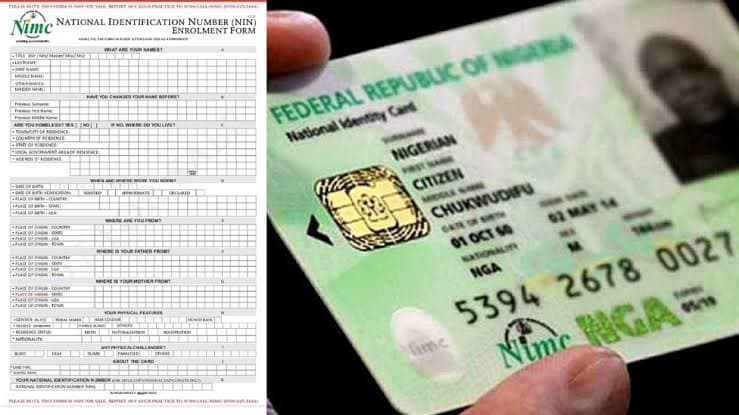
NIN Registration Cost in Nigeria (2026): What You Actually Pay
NIN registration is free in Nigeria. Corrections cost from ₦600 to ₦28,574, and checking your NIN by USSD is ₦50 — all per NIMC rates checked October 2026.
6 Oct 2026 · 9 min read