VAT in Tanzania: The 18% Rate, Who Must Register and How Withholding VAT Works
Tanzania's VAT rate is 18%, due once turnover passes TZS 200 million. Who must register, zero-rated vs exempt, and how VAT withholding works for suppliers.

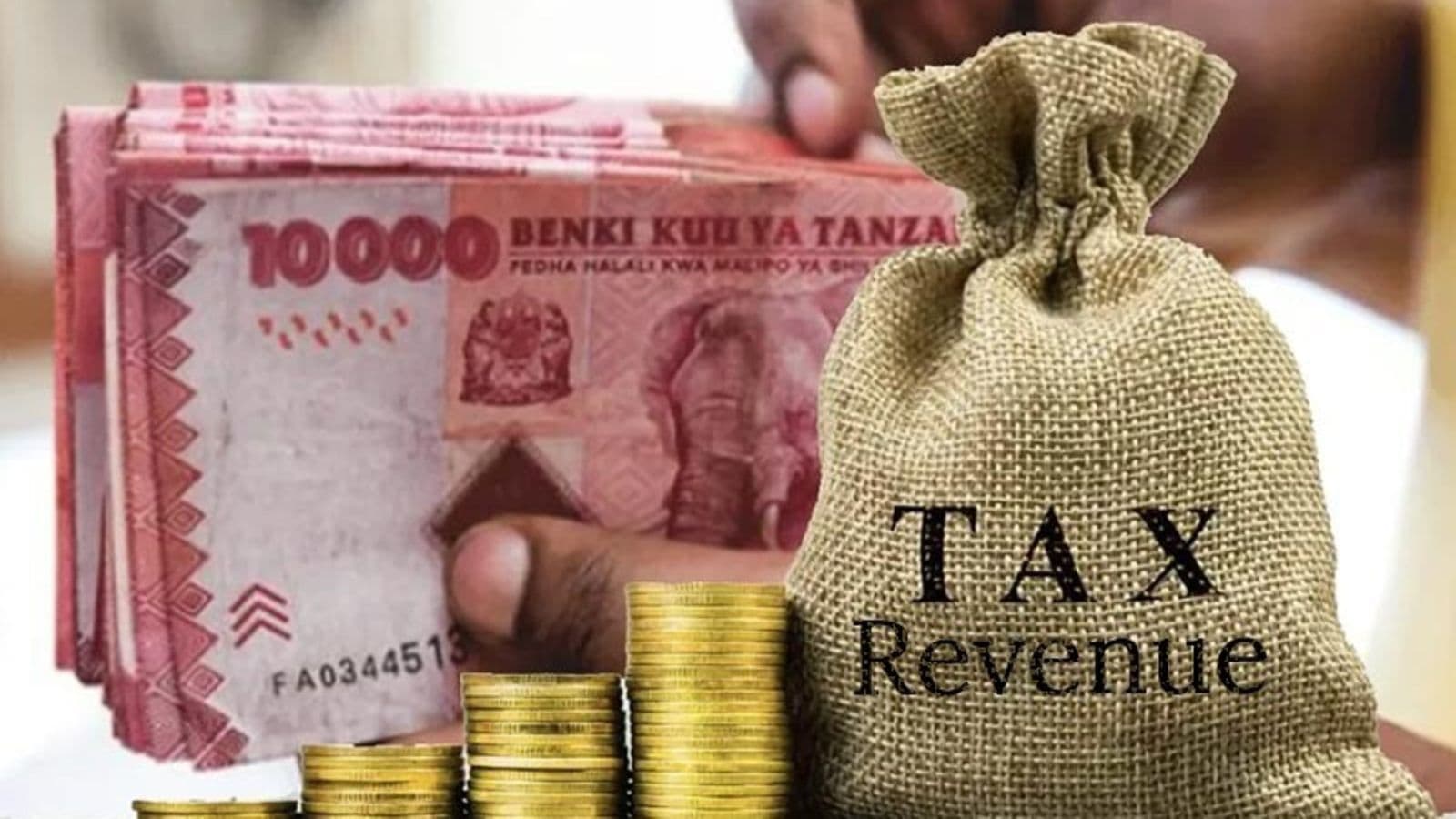
In this guide▾
- What is VAT in Tanzania right now?
- Quick facts: VAT in Tanzania
- Who has to register for VAT in Tanzania
- Zero-rated and exempt supplies: what's the difference
- How withholding VAT works for Tanzanian suppliers
- Filing and paying VAT in Tanzania
- Getting a VAT refund in Tanzania
- Mistakes that cost VAT-registered businesses money
- Frequently asked questions
Win a supply contract with a government office in Tanzania and your first invoice can be a shock: the money that lands is less than the 18% VAT you charged. That's not a mistake. Since July 2025, the Tanzania Revenue Authority (TRA) has required government buyers to withhold part of your VAT and pay it straight to itself, before your money reaches you.
Whether you're chasing that first government tender, running a shop that's crept past the registration line, or just trying to work out what VAT costs you, here's where Tanzania's rules stand, checked against TRA's own guidance in November 2026.
What is VAT in Tanzania right now?
Value Added Tax in Tanzania is charged at a standard rate of 18% on most goods and services sold on the mainland, with exports taxed at 0%. You must register for VAT once your taxable turnover passes TZS 200 million in any twelve-month period, then charge VAT, file a return and pay it to TRA every month (TRA, Value Added Tax, checked November 2026).
Zanzibar runs its own VAT law through the Zanzibar Revenue Authority, with a standard rate of 15% (18% on banking, postal, telecoms, insurance and digital services). This guide covers mainland Tanzania and TRA's rules only (PwC, Tanzania: Other taxes, checked November 2026).
Quick facts: VAT in Tanzania
| Standard VAT rate | 18% (mainland Tanzania) |
| Exports | 0% (zero-rated) |
| Mandatory registration threshold | TZS 200 million taxable turnover in 12 months |
| Six-month trigger | TZS 100 million in any 6 consecutive months |
| Deadline to apply once triggered | Within 30 days |
| Must register regardless of turnover | Professional service providers, government entities, intending traders with proof of plans |
| Return and payment due date | Monthly, by the 20th of the following month |
| Withholding VAT on goods | Agent keeps 3%, pays you 15% |
| Withholding VAT on services | Agent keeps 6%, pays you 12% |
| Withholding remittance deadline | By the 10th of the following month |
| Input tax claim window | 6 months from the invoice or EFD receipt date |
| Refund decision period | Within 90 days of your claim |
Sources: TRA's VAT guide and PwC's Tanzania tax summary, checked November 2026.
Who has to register for VAT in Tanzania
You must apply to register for VAT if either of these is true:
- Your taxable turnover (sales of standard-rated and zero-rated goods or services) passed TZS 200 million in any twelve-month period.
- Your taxable turnover passed TZS 100 million, half the annual figure, in any six consecutive months.
Only taxable supplies count toward those numbers. Pure exempt sales don't push you into registration, no matter how large your business gets (TRA, VAT).
A few categories must register whatever their turnover: professional service providers, government entities and institutions running economic activities, and "intending traders" who can show real evidence they're about to start, such as a signed contract, a tender award, approved building plans or confirmed bank financing. TRA can also decide to register anyone else it judges necessary, including to protect government revenue.
Once you trip either threshold, you have 30 days to apply to the Commissioner General. Miss that window and TRA can register you anyway, without waiting for your application.
If your turnover sits below TZS 200 million, you likely qualify for presumptive tax instead, which uses simpler flat rates up to that same ceiling. Cross it, and presumptive tax stops being an option: you move to standard accounts and, usually, VAT registration.
Zero-rated and exempt supplies: what's the difference
People use these two words interchangeably, and it costs them money. Zero-rated means VAT is charged at 0%, but you can still reclaim the VAT you paid on your own purchases. Exempt means no VAT is charged at all, and you can't reclaim anything either. A business that only sells exempt goods usually ends up worse off on input costs than one selling zero-rated goods at the same price.
Zero-rated supplies include (TRA, VAT):
- Exports of goods and certain services.
- Services that are an integral part of international transport of goods passing through mainland Tanzania.
- Goods held at a port, airport or declared customs area for no more than 30 days while awaiting onward transport.
- Supplies consumed or enjoyed entirely outside mainland Tanzania, with proof.
Exempt supplies, granted by the Commissioner General or listed directly in the VAT Act, include raw materials for long-lasting mosquito nets, government projects funded by grants or loans, disaster relief goods and services, the sale of a house up to TZS 50 million by a licensed developer, precious metals and gemstones traded through designated houses, aircraft parts and maintenance for local operators, equipment for converting vehicles to electric or gas power, pharmaceutical moulds, EV charging equipment, dairy packaging materials, edible oil made from locally grown seeds, garments made from locally grown cotton, and the polyester yarn used to make fishing nets locally (TRA, VAT).
How withholding VAT works for Tanzanian suppliers
Since 1 July 2025, certain buyers in Tanzania have had to withhold part of the VAT they owe you and pay it straight to TRA, rather than handing you the full 18% along with your payment. The withholding agents are the Ministry responsible for finance, government entities and Local Government Authorities that retain their own revenue, public universities and training institutions, and any other registered person the Commissioner General appoints by notice (TRA, VAT; PwC, Tanzania: Other taxes).
The split depends on what you're selling:
- Goods: the agent withholds 3% and pays TRA directly. You receive the other 15%, paid to you along with the price.
- Services: the agent withholds 6%. You receive 12%.
- A supply that mixes goods and services is apportioned 3:2 between the two rates.
Add the two numbers on either side and you get 18%, the full standard rate. Nothing is lost: the agent simply splits your VAT between TRA and you instead of paying it all to you to remit yourself.
Say you run a Dodoma stationery business and invoice a government ministry TZS 5,000,000 for office supplies, goods taxed at the standard rate.
- VAT on the invoice: TZS 900,000. Total invoice: TZS 5,900,000.
- The ministry remits TZS 150,000, 3% of the price, straight to TRA under your TIN.
- It pays you the rest: TZS 5,750,000, made up of the price plus the remaining 15% of VAT.
- You still declare the full TZS 900,000 as output VAT when you file, then offset it with the withholding certificate TRA gives you, leaving the balance you already hold in cash.
Keep every withholding certificate you're given. Without it, you have no way to prove part of your VAT was paid on your behalf, and you'd end up accounting for the same amount twice.
Finance Act 2026, in force since 1 July 2026, tightened the paperwork side of this: withholding agents must now file and remit what they've withheld from you by the 10th day of the following month, a separate and earlier deadline from the usual 20th-day return date (PwC, Tanzania: Other taxes; TanzaniaInvest, Finance Bill 2026: Tax Changes). If you've read older guides that only mention the 3%/6% split, that 10-day rule is the part they're missing.
Filing and paying VAT in Tanzania
Once registered, you file a VAT return every month through TRA's Taxpayer Portal. The return and the VAT payable on it are both due by the 20th day of the following month (TRA, VAT).
Input tax, the VAT you paid on your own business purchases, has to be claimed within six months of the date on the tax invoice or EFD receipt. Miss that window and you lose the credit for good, so reconcile your purchase invoices monthly rather than leaving it until year-end.
You'll need your TRA TIN sorted before any of this applies to you; see our guide on checking your TRA TIN or getting a new one. And if you haven't formally registered your business yet, do that first through BRELA's online system before applying for VAT.
If you're VAT-registered and also running payroll, run your staff's numbers through our Tanzania PAYE calculator so neither bill catches you out at month-end.
Getting a VAT refund in Tanzania
If your input VAT regularly exceeds your output VAT, say you're an exporter charging 0% on sales but paying 18% on local purchases, you'll build up refund claims. TRA must decide on a refund application within 90 days of receiving it. Once approved, payment is due within 30 days after the filing deadline for the last VAT period in the relevant half-year, unless TRA flags a revenue risk. Exporters and other businesses that claim refunds regularly, classed as "regular repayment traders," get 90 days instead. Late payments attract interest at the Bank of Tanzania's commercial lending rate (TRA, VAT).
If you've seen claims that Tanzania now guarantees VAT refund decisions within 30 days, that's not accurate. The Finance Bill 2026 did propose forcing TRA to decide every application within 30 days, but the parliamentary committee had that clause removed before the bill passed, specifically to protect government revenue (TanzaniaInvest, Finance Bill 2026: Tax Changes). The 90-day decision period above is still what applies.
Mistakes that cost VAT-registered businesses money
- Declaring only what you received, not what you charged. On a withheld invoice, your output VAT is still the full 18%. Offset it with your withholding certificate; don't just report the smaller amount that hit your account.
- Losing input VAT to the six-month deadline. File your purchase invoices and EFD receipts as you go. A supplier who reconciles quarterly, not monthly, routinely loses claims to this cut-off.
- Treating exempt and zero-rated the same way. If you sell goods you assume are "VAT-free" without checking which category they fall into, you may be giving up input VAT you're entitled to reclaim.
- Registering late. Cross the threshold and sit on it past 30 days, and TRA can register you itself, on its own terms, rather than yours.
Frequently asked questions
Do exports from Tanzania attract VAT?
No. Exports of goods and most export services are zero-rated at 0%, which means you charge no VAT but can still reclaim the VAT you paid on the inputs that went into making or handling them (TRA, VAT).
What's the real difference between zero-rated and exempt VAT?
Zero-rated supplies are taxed at 0%, and you keep the right to reclaim input VAT on your purchases. Exempt supplies carry no VAT at all, but you lose the right to reclaim input VAT too. Mixing the two up is one of the most common ways Tanzanian businesses underclaim VAT.
Who has to withhold VAT when they pay me in Tanzania?
Government entities that retain their own revenue, Local Government Authorities, public universities and training institutions, the Ministry responsible for finance, and any other registered person the Commissioner General names by notice. If you're invoicing a private company that isn't on that list, standard VAT rules apply and nothing is withheld.
How do I claim back VAT that a government client withheld?
You declare the full VAT on the invoice as output tax, then offset it with the withholding certificate the agent gives you for the portion it paid directly to TRA. Keep every certificate; it's your evidence that part of your VAT bill has already been settled.
What happens if I don't register once I cross the TZS 200 million threshold?
You have 30 days to apply once you're over the threshold. If you don't, TRA's Commissioner General can register you anyway, without waiting for your application, and you'll be liable for VAT from that point regardless.
Is VAT the same on Zanzibar as on the mainland?
No. Zanzibar has its own VAT law under the Zanzibar Revenue Authority, with a standard rate of 15% (18% on banking, postal, telecoms, insurance and digital services), separate from TRA's 18% mainland rate.
Keep reading
Tanzania Passport Application: Fees, Documents and How to Apply
A Tanzanian passport costs TSH 150,000 in total if you apply inside the country, paid in two separate instalments, or a flat USD 90 through an embassy abroad.
11 Nov 2026 · 7 min read

Mixx by Yas Charges: Sending, Withdrawal and Transaction Fees in Tanzania
Mixx by Yas (ex-Tigo Pesa) charges TZS 30 to send TZS 1,000 to another wallet, but TZS 310 to withdraw it in cash. See the full 2026 tariff table for Tanzania.
8 Nov 2026 · 5 min read

Airtel Money Tanzania: Registration, Charges and How to Reverse a Mistake
How to register for Airtel Money in Tanzania, what the government e-money levy adds to a transaction, and the real way to reverse a wrong payment.
8 Nov 2026 · 5 min read