Leaving land to sit idle in Kenya is a missed opportunity. With the right investment, there are many ways to make money from idle land, generate passive income, and even increase in value over time.
If you have unused land in the rural or urban areas, you don’t need to let it waste away. Instead, here are some things to do with idle land that are not only practical but also profitable in Kenya and across Africa.
Related Read: How to Save for Land in Kenya With a Low Salary
Profitable Uses for Idle Land
From agribusiness ideas for idle land like fruit farming to commercial projects such as rental units, your unused land holds untapped potential. Let’s explore some of the best investments for idle land in Africa to make money easily.
Plant Trees for Timber and Poles
Tree farming in Kenya is one of the simplest long-term investments you can make with idle land. Eucalyptus, cypress, pine, bamboo, and grevillea are among the most popular species grown for timber, firewood, and construction poles.
The construction industry in Kenya has a constant demand for timber and posts, which means you’ll always have a ready market.
For example, eucalyptus trees can mature within 6–8 years, and with proper spacing, one acre can host up to 1,000 trees. Kakuzi tree seedlings mature even faster.
At maturity, a single pole can sell for between KSh 500–1,500 depending on size. That means an acre of well-managed timberland can bring in millions in the long run.
Fruit Farming
If you prefer something that generates income within a shorter timeframe, fruit farming is among the best things to do with idle land. Fruits like avocados, mangoes, pawpaws, bananas, and oranges are in high demand both locally and for export.
Kenya is a leading exporter of avocados to markets in Europe and the Middle East. According to Horticultural Crops Directorate, avocado exports earned Kenya billions of shillings in recent years, showing just how lucrative fruit farming can be.
One acre of grafted avocado trees, for instance, can host around 150 trees. Each mature tree produces between 200–300 fruits per season, and with export prices ranging from KSh 10–30 per fruit, the returns are impressive.
Greenhouse Farming
Greenhouse farming is one of the most profitable things to do with idle land by allowing you to maximize yields even on a small piece of land. Crops such as tomatoes, capsicum, cucumbers, strawberries, and herbs thrive under controlled conditions.
Greenhouses protect crops from harsh weather and pests, while also allowing year-round production. This ensures farmers can sell their produce even during off-seasons when prices are highest.
Although initial setup costs range between KSh 100,000–500,000 depending on size and materials, the returns are often worth it. For example, one medium-sized greenhouse of tomatoes can generate KSh 400,000–600,000 per season if well managed.
Bee Keeping (Apiculture)
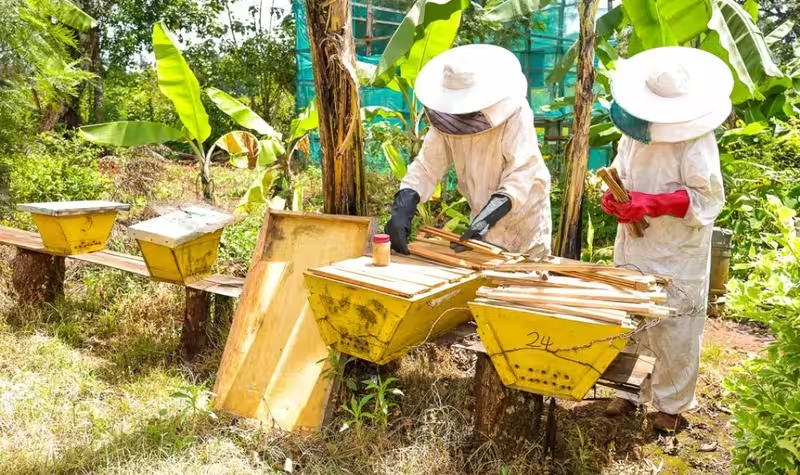
Bee keeping is another sustainable way to make money from idle land. The startup costs are relatively low compared to other agribusiness ideas in Kenya, yet the returns are high.
Bees produce honey, beeswax, propolis, and royal jelly, all of which have strong demand in both local and international markets. Kenya’s honey consumption far outweighs local production, meaning there’s still plenty of room for new players in the sector.
A single Langstroth hive can yield 20–30 kg of honey per harvest. With one kilogram of raw honey selling for between KSh 600–800, even a few dozen hives can create a profitable business.
Mushroom Farming
Mushroom farming is gaining popularity in Kenya, especially oyster and button mushrooms. Unlike conventional crops, mushrooms require little space, which makes them perfect if your idle land is small or partially shaded.
They can be grown in simple structures using agricultural waste such as maize stalks and wheat straws. Mushroom farming has quick turnover — harvests start within 3–4 weeks of planting, and the market is always expanding due to their health and nutritional benefits.
One kilogram of mushrooms sells for KSh 500–1,000 depending on the market, making this one of the best ways to make money from idle land.
Rental Units and Affordable Housing
Not all idle land needs to be used for farming. If your land is in or near an urban center, converting it into rental units is among the smartest things to do with idle land in Kenya.
The demand for affordable housing is high, particularly bedsitters and one-bedroom units. Even simple mabati houses can generate steady rental income, while permanent flats or apartment blocks provide even higher long-term returns.
For example, a plot of land in a satellite town like Kitengela or Ruiru can easily accommodate 20 bedsitters. At an average rent of KSh 5,000 per unit, that’s KSh 100,000 per month in passive income.
👉 Related Read: Real Estate Investment in Kenya: Should You Buy Land or Apartments?
Pro Tip: Building rental units has a relatively low ROI, especially with large apartment flats. Construction hassles, compliance issues, and bank loans make the whole process difficult.
Event Grounds and Picnic Parks
If your land is scenic or located near towns, highways, or tourist routes, you can transform it into a recreational area. Event grounds are increasingly in demand for weddings, graduation parties, and corporate team-building activities.
By investing in landscaping, basic amenities, and security, you can easily attract regular bookings. Adding features like gardens, gazebos, or playgrounds increases the land’s appeal and value.
Snail Farming
Though still relatively new in Kenya, snail farming is slowly catching on as an agribusiness opportunity. Snails are a delicacy in many international markets, especially Europe and Asia. They are also valued for their slime, which is used in cosmetics and pharmaceuticals.
Snails require little space and can be reared in controlled pens on idle land. With export markets paying premium prices, this is one of the most innovative and profitable things to do with idle land if you are willing to take a chance on a niche market.
Flower Farming
Kenya is one of the largest exporters of cut flowers globally, especially roses and carnations. If you own land near Nairobi, Naivasha, or Eldoret, flower farming is an excellent way to generate income.
Flowers are not only grown for export; local demand for ornamental flowers is also growing as more Kenyans embrace landscaping and home décor.
While the initial investment in infrastructure like greenhouses and irrigation is high, the returns can be substantial.
Tree Nursery Business
Another smart option is to use idle land to start a tree nursery. With increasing awareness of climate change and government-backed reforestation programs, seedlings are in high demand.
You can grow fruit seedlings, timber seedlings, or indigenous trees and sell them to farmers, NGOs, and government programs.
A single seedling sells for KSh 20–100 depending on the species, meaning even a small nursery can generate steady profits.
Quick Comparison Table of Profitable Ideas for Idle Land
| Idea | Initial Investment (KSh) | Time to Returns | Average Income Potential | Suitability |
|---|---|---|---|---|
| Tree Farming | 50,000–200,000 | 6–10 years | Millions long-term | Large rural land |
| Fruit Farming | 100,000–500,000 | 2–4 years | High seasonal income | Small to medium land |
| Greenhouse Farming | 100,000–500,000 | 3–6 months | KSh 400K–600K per season | Small land near markets |
| Bee Keeping | 30,000–200,000 | 6 months | KSh 600–800 per kg of honey | Any land size |
| Mushroom Farming | 50,000–150,000 | 1 month | KSh 500–1,000 per kg | Small/shaded land |
| Rentals | 500,000–10M+ | Immediate after construction | Monthly passive income | Urban/town land |
| Event Grounds | 200,000–1M+ | Immediate after setup | KSh 20K–200K per event | Scenic/town land |
| Snail Farming | 50,000–200,000 | 6–12 months | Export premium pricing | Small/controlled land |
| Flower Farming | 500,000–5M+ | 6–12 months | Very high (export market) | Fertile irrigated land |
| Tree Nursery | 20,000–100,000 | 3–6 months | KSh 20–100 per seedling | Any land size |
Final Thoughts
There are countless things to do with idle land in Kenya beyond just letting it sit unused.
Whether you want long-term investments like tree farming, quick income ventures like greenhouse or mushroom farming, or non-agricultural uses like rentals and event grounds, your land can generate wealth.
Instead of seeing idle land as a burden, think of it as an asset waiting to work for you. With proper planning, investment, and market research, your unused land can become a profitable venture for years to come.