Kenya Power customers spent an average of Ksh 3,728 monthly for just 120 units in 2024, and that’s before factoring in frequent blackouts. Meanwhile, solar-powered homes are slashing their electricity bills by up to 70% while enjoying uninterrupted power. But is solar truly worth it for your household?
This comprehensive guide breaks down solar vs Kenya Power real costs, benefits, and return on investment to help you decide between the grid and solar panels for your home.
How Much Does Kenya Power Cost in 2024?
Domestic consumers using more than 100 kWh monthly currently pay approximately Ksh 29.92 per kWh as of December 2024, up from Ksh 28.57 earlier in the year. This Kenya Power tariff includes the base rate, Fuel Energy Cost (FEC), Foreign Exchange Rate Fluctuation Adjustment (FERFA), Water Resource Management Authority levy, and 16% VAT.
For a typical 3-bedroom household consuming 200 kWh monthly, your Kenya Power bill comes to Ksh 5,984 per month or Ksh 71,808 annually. That’s a significant chunk of household income, and Kenya Power rates keep trending upward with no signs of stabilizing.
Beyond the high electricity cost per unit, Kenya Power customers face reliability issues that add hidden costs. The average power outage duration reached 10.14 hours in the 2023/2024 financial year, with blackout frequency increasing to 3.96 incidents annually. Major nationwide blackouts hit Kenya in May, August, September, and December 2024 alone, disrupting homes and businesses across the country.
Kenya Power electricity prices also fluctuate monthly based on forex rates and fuel costs, making it nearly impossible to budget accurately for your monthly electricity bill. Regular scheduled outages across counties disrupt daily activities, and if you’re setting up a new Kenya Power connection or upgrading service, expect significant upfront connection fees, especially in areas far from existing infrastructure.
How Much Do Solar Panels Cost in Kenya?
Solar panel prices in Kenya depend on your household’s energy consumption and how much electricity you use daily. A small 3-4 kW solar system suitable for a 2-3 bedroom home with basic appliances costs between Ksh 100,000 to Ksh 250,000. This solar installation powers lights, TV, fridge, and small appliances, producing 12-16 kWh daily.
Medium solar systems of 7-10 kW work well for 4 bedroom homes with comprehensive needs, running from Ksh 300,000 to Ksh 650,000. These handle all household appliances including AC, washing machine, and water heaters, generating 30-45 kWh daily and significantly reducing your dependence on Kenya Power.
Large solar power systems of 15-20 kW suit big homes and small businesses, costing Ksh 830,000 to Ksh 2,500,000 and producing 50-90 kWh daily to power entire properties with commercial-grade needs.
A complete solar panel installation in Kenya includes monocrystalline solar panels (recommended for Kenya’s climate), an inverter to convert DC to AC power, battery storage if you want 24/7 solar electricity, mounting systems and wiring, professional installation labor, and warranty coverage that typically lasts 20-25 years for solar panels.
Is Solar Cheaper Than Kenya Power? The Real ROI
Most residential solar panel installations in Kenya achieve payback within 3-5 years, with some solar systems breaking even in as little as 2 years for high-consumption households. Solar energy is cheaper than Kenya Power in the long run once you recoup your initial investment, making it one of the profitable investment opportunities available to Kenyan homeowners.
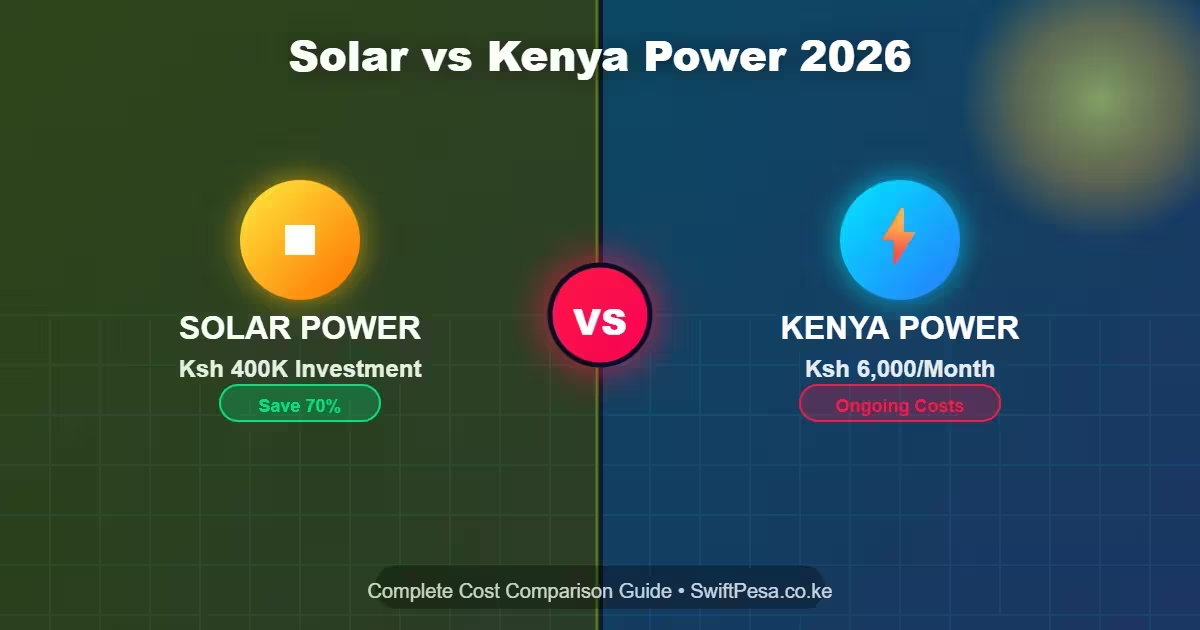
Consider a 7 kW solar system costing Ksh 400,000. If it replaces 200 kWh of Kenya Power grid consumption, you save Ksh 6,000 monthly or Ksh 72,000 in annual electricity costs. This gives you a solar payback period of 5.5 years. Over the solar panel lifespan of 25 years, you’re looking at Ksh 1,400,000 in total savings compared to Kenya Power. After the payback period, solar electricity is essentially free.
Your actual solar ROI depends on several factors. Current Kenya Power consumption matters most because higher electricity usage means faster payback on your solar investment. Solar system size and efficiency play a role, as properly sized solar installations optimize financial returns.
Installation quality ensures maximum solar performance over the long term. Your location affects solar output since areas with more sunshine generate more electricity. Finally, solar financing terms impact returns, with cash purchases yielding better results than solar loans due to interest costs.
If you’re comparing this to other investment options like investing in government bonds in Kenya or real estate investment, solar offers unique advantages including immediate utility bill reduction while building long-term asset value.
Can I Get Solar Panels on Installments in Kenya?
Pay-As-You-Go (PAYGO) solar models have made solar panels accessible to many Kenyan households. Companies offer solar systems with small deposits as low as Ksh 10,000, with the remainder spread over 36 months at approximately Ksh 2,200 monthly.
Popular PAYGO solar providers include M-KOPA, d.light, and Solar Panda. The major advantage is no large upfront payment, immediate access to solar power, and full solar panel ownership after completing payments.
If you’re looking to save for solar installation, the same strategies from our guide on how to save for land in Kenya with low salary can be applied. Using digital savings apps can help you accumulate the deposit faster, or you could explore side hustles in Nairobi to generate additional income for your solar payments.
Stanbic Bank and other financial institutions offer solar financing in Kenya with tailored repayment plans and potential savings of 30-40% on energy costs. Typical solar loan terms include repayment periods of 5-7 years, competitive clean energy interest rates, and varying collateral requirements by lender.
Solar lease-to-own programs provide zero upfront cost options where you lease solar equipment and own it after 7-10 years. Fixed monthly solar payments are often lower than your current Kenya Power bill, making the transition to solar energy painless.
Solar Power vs Kenya Power: Key Differences
Solar energy gives you predictable electricity costs with fixed monthly payments if financed or zero ongoing costs after payback. You get uninterrupted solar power with no blackouts or Kenya Power load shedding disruptions.
The environmental impact is positive with zero emissions from solar panels and a reduced carbon footprint. Homes with solar systems in Kenya often see increased property values, and you gain energy independence with protection from future Kenya Power tariff increases.
Kenya Power grid electricity offers lower initial investment since there are no upfront solar equipment costs. You have no maintenance responsibility as Kenya Power handles all infrastructure. Kenya Power supply is unlimited with no constraints on electricity consumption, and the established grid infrastructure is available in most urban and peri-urban areas across Kenya.
Should I Use Kenya Power or Solar?
Choose solar panels if you consume 100+ kWh monthly (spending Ksh 3,000+ on Kenya Power bills), experience frequent power outages in your area, have roof space with good sun exposure for solar installation, can access solar financing or have upfront capital, plan to stay in your home for 5+ years, and want predictable energy costs independent of Kenya Power rate changes.
Stick with Kenya Power if your monthly electricity consumption is very low (under 50 kWh), you rent your home unless your landlord agrees to solar installation, your roof is heavily shaded or unsuitable for solar panels, you may relocate within 2-3 years, you prefer zero maintenance responsibility, or the initial solar investment is completely unaffordable even with financing.
Many Kenyan households are adopting a hybrid solar and Kenya Power approach that offers the best of both worlds. Install solar panels to cover 70-80% of daytime electricity consumption, maintain your Kenya Power grid connection for backup and nighttime use, and reduce Kenya Power bills by 60-70% while keeping security of supply. This hybrid strategy offers maximum flexibility and the fastest payback period on your solar investment.
How Long Do Solar Panels Last in Kenya?
Solar panels require annual cleaning at Ksh 5,000-10,000 for professional panel washing to maintain optimal solar electricity generation. Inverters may need replacement after 10-15 years at a cost of Ksh 80,000-150,000. Lithium solar batteries, if included, last 10-15 years. The solar panels themselves come with 20-25 year warranties with minimal degradation in solar power output.
Over 25 years, expect total solar maintenance costs of approximately Ksh 200,000-300,000, still far less than 25 years of Kenya Power grid electricity at current rates. Solar panel lifespan in Kenya typically reaches 25-30 years with proper maintenance, making solar a durable long-term investment compared to ongoing Kenya Power costs.
How to Calculate If Solar is Worth It
Calculate your solar breakeven point by checking your average monthly Kenya Power bill from your Kenya Power official website account or Kenya Power tokens records. Multiply by 12 for annual electricity costs. Get quotes for appropriately sized solar systems from reputable solar companies in Kenya. Divide the solar system cost by annual electricity savings from replacing Kenya Power. This gives your payback period in years. If your solar payback period is under 7 years, solar panels are financially advantageous over Kenya Power.
For example, if you spend Ksh 6,000 monthly on Kenya Power (Ksh 72,000 annually) and a suitable solar system costs Ksh 360,000, your payback period is 5 years. After that, you enjoy nearly free solar electricity while Kenya Power customers continue paying rising rates. This calculation approach is similar to what you’d use when creating a business plan for any investment.
Comparison: Solar vs Kenya Power
| Factor | Solar Investment | Kenya Power |
|---|---|---|
| Initial Cost | Ksh 100,000 – 650,000+ | Connection fee only (Ksh 15,000-35,000) |
| Monthly Cost (200 kWh) | Ksh 0 after payback | Ksh 5,984 |
| Annual Cost (200 kWh) | Ksh 0 after payback | Ksh 71,808 |
| Payback Period | 3-5 years average | N/A |
| 25-Year Total Cost | Ksh 100,000-650,000 (initial) + Ksh 200,000 (maintenance) | Ksh 1,795,200 (current rates) |
| Power Reliability | 99.9% (with battery backup) | Variable (10+ hours outages annually) |
| Maintenance | Annual cleaning, occasional repairs | None required |
| Environmental Impact | Zero emissions | Mixed (85% renewable, 15% thermal) |
| Price Predictability | Fixed | Fluctuates monthly |
| Lifespan | 25+ years | Indefinite (as long as service available) |
| Financing Options | PAYGO, loans, lease-to-own | Pay-as-you-consume |
The Verdict: Is Solar Worth It in Kenya?
For most Kenyan households consuming over 100 kWh monthly, solar investment offers superior long-term value compared to relying solely on Kenya Power grid electricity. The combination of reducing Kenya Power costs, government support for renewable energy, and technological improvements makes solar panels increasingly economical and reliable for Kenyan homes.
However, your specific circumstances matter. Calculate your actual Kenya Power consumption from your monthly bills on the Kenya Power official website, get multiple quotes from reputable solar installers in Kenya, explore solar financing options like PAYGO and solar loans, and consider a hybrid approach combining solar and Kenya Power for maximum flexibility.
The energy landscape in Kenya is evolving rapidly. With Kenya Power grid electricity costs rising and solar panel technology becoming more affordable, the window for maximizing solar investment returns is now.
Whether you choose full solar, hybrid solar and Kenya Power, or stick with the grid, understanding the true costs of each option ensures you make the best decision for your household’s energy future and long-term financial health.
How long do solar panels last in Kenya?
Solar panels in Kenya typically last 25-30 years with proper maintenance. Most manufacturers offer 20-25 year warranties on solar panel performance. Kenya’s abundant sunshine actually helps solar panels perform optimally, though regular cleaning is necessary to remove dust and maximize solar electricity generation efficiency.
Can I get solar on installments in Kenya?
Yes, multiple solar financing options exist in Kenya including PAYGO solar models from companies like M-KOPA (starting at Ksh 10,000 deposit), bank solar loans with 5-7 year terms from institutions like Stanbic Bank, and lease-to-own programs with zero upfront costs. Monthly solar payments are often lower than your current Kenya Power bill.
Is solar cheaper than Kenya Power in the long run?
For households consuming over 100 kWh monthly, solar becomes cheaper than Kenya Power after 3-5 years. Over 25 years, a solar system costing Ksh 400,000 saves over Ksh 1.4 million compared to Kenya Power grid electricity at current rates, not accounting for future Kenya Power tariff increases which happen regularly.
What size solar system do I need for a 3 bedroom house in Kenya?
A typical 3-bedroom house in Kenya consuming 150-200 kWh monthly needs a 5-7 kW solar system costing Ksh 250,000-400,000. This solar installation powers lights, TV, fridge, microwave, washing machine, and small appliances. Add battery storage for 24/7 solar power availability independent of Kenya Power.
Can I sell excess solar power back to Kenya Power?
Yes, Kenya introduced net metering regulations in 2024 allowing households to sell excess solar electricity to the Kenya Power grid. You receive 50% credit per kWh for surplus solar power, with caps at 10 kW for homes. However, net metering implementation with Kenya Power is still limited in many areas.
How much can I save with solar compared to Kenya Power?
Average Kenyan households save 60-70% on electricity costs with solar panels. A home paying Ksh 5,000 monthly to Kenya Power can reduce bills to Ksh 1,500-2,000 with a hybrid solar system, or eliminate Kenya Power bills entirely with a full off-grid solar system after the payback period.
How much does it cost to install solar panels in Kenya?
Solar installation costs in Kenya range from Ksh 100,000 for small 3 kW systems to Ksh 650,000+ for larger 10 kW residential solar systems. The cost of solar panels in Kenya depends on system size, solar panel quality (monocrystalline vs polycrystalline), battery capacity, and installation complexity. Most Kenyan homes need Ksh 250,000-400,000 for adequate solar coverage.
Which is better Kenya Power or solar for my home?
Solar is better than Kenya Power for most homes consuming over 100 kWh monthly due to long-term cost savings, energy independence, and protection from Kenya Power rate increases. Kenya Power remains better for very low consumption households under 50 kWh monthly, renters without landlord approval for solar installation, or people planning to relocate within 2-3 years before solar payback completes.