How to Do Your SARS eFiling Tax Return Step by Step (2026 Filing Season)
South Africa's 2026 SARS eFiling season runs 13 July to 23 October. Here's how to register, check auto-assessment and submit your ITR12 step by step.


In this guide▾
- Quick facts: SARS filing season 2026
- Do you need to submit a tax return at all?
- What's new for the 2026 filing season
- Documents to gather before you start
- How to register and log in to SARS eFiling
- How to submit your ITR12 step by step
- How SARS auto-assessment works in 2026
- Medical aid and retirement annuity deductions
- What to watch out for
- Frequently asked questions
South Africa's 2026 SARS eFiling season for individual taxpayers runs from 13 July to 23 October 2026, with auto-assessments going out from 1 to 12 July and provisional taxpayers getting until 22 January 2027 (SARS Filing Season, checked September 2026). If you haven't logged into eFiling yet, here's exactly what to do: check whether you've been auto-assessed, register or log in, pull up your ITR12, fill in what's missing, and submit before your deadline.
Quick facts: SARS filing season 2026
| Taxpayer category | Filing window |
|---|---|
| Auto-assessment notices | 1–12 July 2026 |
| Non-provisional individuals | 13 July – 23 October 2026 |
| Provisional taxpayers | 13 July 2026 – 22 January 2027 |
| Trusts | 19 September 2026 – 22 January 2027 |
Source: SARS, Filing Season, checked September 2026.
Do you need to submit a tax return at all?
Yes, if you earn more than R500,000 a year, or if any part of your income doesn't come cleanly through one employer's PAYE. Below that, you're only exempt if every one of four conditions applies to you.
SARS says you don't have to file if all of the following are true: you have one source of income (one employer, one salary), you got no travel allowance or company car, you have no other income at all — no interest, no rental, no side hustle — and your employer correctly deducted PAYE all year (SARS Filing Season). Say you're an admin assistant in Durban earning R320,000 a year from one employer with nothing else coming in — you're likely exempt. But the moment you add a weekend side hustle, rental flat in Mitchells Plain, or interest above the exemption on a savings account, you need to file even if your salary alone is under R500,000. For the full breakdown of every condition and what disqualifies you from the exemption, see our guide on who actually needs to submit a SARS tax return. If that side hustle is growing into something bigger, it's worth weighing up the cost of staying a sole proprietor against registering a company with CIPC — formal registration can be done online for as little as R125. If that side hustle is a shop rather than freelancing, see our guide on starting a spaza shop in South Africa for how the registration, tax and funding rules work for small retail specifically. A SASSA grant you receive, or manage on behalf of a child or an elderly relative, doesn't count as income for this test — see our guide to SASSA grant amounts if you need the current figures. Filing rules differ sharply across the region — Tanzania's PAYE, for example, is withheld monthly by the employer against TRA's own bands, not SARS's.
Don't guess. If SARS's system shows a return as outstanding, it doesn't care that you thought you were exempt — the penalty clock starts anyway. Log into eFiling and check your compliance status if you're not sure.
What's new for the 2026 filing season
- More prefilled data. SARS now pulls in more third-party information (IT3(t) data, investment income, medical aid details) before you open your return, so there's less manual capturing (SARS, Changes for Filing Season 2026).
- Simpler questions and a medical aid dropdown, meant to cut the mistakes people make selecting the wrong scheme.
- WhatsApp channel. You can now view your Notice of Assessment (ITA34) and Statement of Account, and upload supporting documents, through SARS's WhatsApp number (0800 11 7277) instead of only through eFiling.
- Biometric facial recognition has been added to the eFiling login process for some users, alongside the usual one-time pin (OTP) (SARS eFiling guide).
- More provisional taxpayers are being auto-assessed this year for the first time, not just salaried employees (SARS, Changes for Filing Season 2026).
At the season's opening on 2 July 2026, SARS reported that over 1.9 million taxpayers had already received an auto-assessment, with about R8 billion in refunds paid out within 72 hours, and it expects more than six million people to be auto-assessed in total this year (SARS media release).
Documents to gather before you start
Have these ready — eFiling will move faster and you'll make fewer mistakes:
- IRP5/IT3(a) certificate(s) from every employer you worked for in the tax year.
- Medical aid tax certificate showing your contributions and any out-of-pocket medical expenses.
- Retirement annuity or pension fund certificate (IT3 certificates from your RA or provident fund).
- Investment income certificates (IT3(b)) from your bank or unit trust provider.
- Banking details — SARS can't pay a refund into an unverified account.
- Travel logbook if you claim a travel allowance.
- Records of any other income: freelance invoices, rental income and expenses, foreign income, capital gains on property or shares.
- Your tax reference number and ID number.
Keep all of it for five years — SARS can ask for supporting documents after you've filed (SARS, how to submit an ITR12).
How to register and log in to SARS eFiling
- Go to eFiling. Register at sarsefiling.co.za or download the SARS MobiApp if you'd rather file from your phone.
- Accept the terms and conditions on first login — read them, scroll to the bottom, and select "I Accept."
- Confirm your security contact details (cellphone number or email) so SARS can send you a one-time pin.
- Complete or confirm your personal details, then click "Next."
- Pass facial recognition authentication if prompted, then choose your preferred channel (SMS or email) for the OTP and enter the last six digits sent to you.
- Land on your eFiling dashboard. From here you can see your Notice of Assessment, Statement of Account and Tax Compliance Status at a glance (SARS eFiling guide).
If your profile is flagged as inactive, belongs to a deceased estate, or shows multiple tax numbers, eFiling will tell you to sort it out at a SARS branch before you can file.
How to submit your ITR12 step by step
- Check for an auto-assessment first. If SARS has already assessed you, you'll see it on your dashboard or get an SMS/email between 1 and 12 July. Read the section below before doing anything else.
- Open your return. Click "Returns" → "Returns Issued" → "Personal Income Tax (ITR12)," select tax year "2026," and click "Request Return" if it hasn't already been issued to you (SARS eFiling guide).
- Work through the wizard. A short questionnaire customises your ITR12 to your situation — answer honestly about freelance income, rental property, foreign income and so on, because it decides which sections appear.
- Refresh and check the prefilled data. Your IRP5 income, PAYE deducted, medical aid contributions and RA contributions should already be there. Compare every figure against your own certificates before trusting it — our South Africa income tax calculator shows roughly what your PAYE should be for the 2026/27 tax year if you want a quick sanity check.
- Declare anything not prefilled. Freelance or side-hustle income, rental income, foreign income and capital gains don't always arrive from third parties — add them yourself under the relevant container. If that freelance or side-hustle income is a regular thing, check whether it also makes you a provisional taxpayer who must pay SARS in two instalments a year rather than just filing once.
- Add your deductions. Retirement annuity contributions, additional medical expenses and (if it applies) home office costs go here.
- Save as you go. Click "Save" at any point so you don't lose your work if you get interrupted.
- Submit. Once everything's captured, click "Submit return to SARS," check the pre-populated date on the Declaration screen, and click "Confirm" (SARS eFiling guide).
- Wait for your ITA34. You'll get a Notice of Assessment showing whether you're due a refund or owe SARS money, and can view it on eFiling, the MobiApp, or now via WhatsApp.
If you'd rather not do this yourself, freelancers and anyone with a side income can also work through a registered tax practitioner — but unregistered "practitioners" can prepare your return, they just can't submit it on your behalf anymore.
How SARS auto-assessment works in 2026
SARS auto-assesses you if your income is simple — mainly employment and investment income reported to SARS by third parties (employers, banks, medical schemes, retirement funds) — and your personal details are up to date (SARS, how auto-assessment works). You won't be auto-assessed if you have rental income, freelance income or other income types SARS can't verify from third-party data.
- If you agree with it: do nothing. There's no "accept" button — the assessment simply becomes final. A refund of R100 or more pays out within 72 hours; smaller amounts roll over to next year.
- If you disagree: open your return on eFiling or the MobiApp from 13 July, add whatever's missing, and submit a full ITR12 by 23 October 2026 (22 January 2027 if you're an auto-assessed provisional taxpayer). This replaces the auto-assessment with your corrected version.
- If you owe money: debts of R100 or more must be paid by the due date on your assessment, and interest accrues on anything outstanding regardless of amount.
Want to know what number to expect before you check? See how much your SARS refund could actually be and how the calculation works.
Check your banking details are current before the season opens — SARS can't pay a refund into an account it can't verify.
Medical aid and retirement annuity deductions
Two deductions catch out a lot of first-time filers, so check these against your own certificates rather than assuming eFiling got it right.
Medical scheme fees tax credit for the 2026 tax year (1 March 2025 – 28 February 2026, the year you're filing now) is a fixed monthly amount, not a percentage:
| Who | Monthly credit |
|---|---|
| Main member | R364 |
| First dependant | R364 |
| Each additional dependant | R246 |
Source: SARS, Medical Tax Credit Rates, checked September 2026. These are on top of any additional medical expenses credit if your out-of-pocket costs were high relative to your income. The credit is the same flat amount whether you're on a cheap hospital plan or a full comprehensive option — see our breakdown of medical aid, hospital plans and gap cover costs if you're still deciding which one makes sense for your budget.
Retirement annuity and pension contributions are deductible up to the lesser of three amounts: R350,000 a year, 27.5% of the higher of your remuneration or taxable income, or your taxable income before capital gains (SARS, section 11F FAQ). Anything you contribute above that cap isn't lost — it carries forward and can be deducted in a future year. Note: a higher R430,000 cap only kicks in for the 2026/2027 tax year starting 1 March 2026, so it doesn't apply to the return you're filing this season — don't let a headline about the new cap confuse you into claiming too much now. If you also took money out of your retirement fund's two-pot savings pot during the year, that withdrawal isn't a deduction — it's added to your taxable income and taxed at your marginal rate, so check our guide on two-pot withdrawals and tax before you file. A tax-free savings account works differently again: contributions get no deduction at all, but growth inside it is never taxed — see our guide to the best TFSA in South Africa if you're weighing it against an RA.
What to watch out for
- Missing the deadline is expensive, even if you owe nothing. SARS charges an administrative penalty of R250 to R16,000 a month for an outstanding return, scaled to your taxable income, for up to 35 months (SARS, Admin Penalty). It applies from your first missed return going back to 2007 if SARS's records show you have one outstanding. See exactly how that penalty is calculated, and what to do if you've already missed the 23 October cut-off, in our guide on what happens if you miss the SARS deadline.
- Thinking you're exempt when you're not. The R500,000 threshold only holds if all four conditions above are met. A weekend Uber gig, a rental flat, or a decent interest payout takes you out of the exemption.
- Phishing SMS and email around tax season. SARS will never ask for your password, OTP, banking PIN or eFiling login through email, SMS, WhatsApp or a phone call, and it doesn't send links to other websites, including bank sites (SARS, Scams and Phishing). If a message promises a refund and asks you to click a link, don't. Log into eFiling directly instead.
- Rubber-stamping your auto-assessment without checking it. SARS's prefilled data comes from your employer, bank and medical scheme — if any of them made an error, that error is now on your assessment too. Compare it against your own IRP5 and certificates before you let it stand.
- Letting an unregistered "tax practitioner" submit for you. They can prepare a return, but only you (or a properly accredited practitioner) can hit submit.
Frequently asked questions
When does SARS eFiling open for the 2026 filing season?
Auto-assessments go out from 1 to 12 July 2026. Non-provisional individuals can file from 13 July to 23 October 2026, and provisional taxpayers and trusts have until 22 January 2027.
Do I have to submit a tax return if I earn under R500,000 a year?
Only if you meet all four conditions: one employer, no travel allowance or company car, no other income of any kind, and correct PAYE deductions all year. If you have a side hustle, rental income or investment interest, you need to file regardless of your salary.
What happens if I miss the SARS eFiling deadline?
You risk an administrative penalty of R250 to R16,000 a month, based on your taxable income, for as long as the return stays outstanding — up to 35 months. Filing late but before SARS catches it is still far cheaper than not filing at all.
How do I know if SARS auto-assessed me?
Check your eFiling dashboard or the SARS MobiApp between 1 and 12 July, or watch for an SMS or email from SARS. If you agree with the figures, you don't need to do anything; if you don't, file a full ITR12 by your deadline instead.
Can I file my SARS tax return using the MobiApp instead of eFiling?
Yes. The SARS MobiApp lets you register, view and submit your ITR12, and check your Notice of Assessment, the same way eFiling on a computer does — useful if you're filing from your phone on mobile data.
How long should I keep my supporting documents after I file?
Five years. SARS doesn't want you to submit documents with your return, but it can ask for them later, and you need to be able to produce them.
If you're earning extra income through freelancing or a side hustle that now needs declaring, see our guides on starting freelancing in Africa without experience and the best freelance websites that actually pay — both cover the kind of income that pushes you out of the R500,000 exemption. If you're weighing up which in-demand digital skill to learn for extra income, our roundup of digital skills in demand across Africa is a good place to start. For more on managing money day to day, browse our personal finance guides, and see our country guides for how other African tax authorities handle filing.
Keep reading

How Much Must You Earn to Submit a Tax Return in South Africa in 2026?
If you earned under R500,000 from one employer in 2025/26 with no allowances, you may not need to file a SARS tax return. See the exact thresholds.
19 Oct 2026 · 8 min read

SARS 2026 Tax Deadline: What Happens If You Miss 23 October
SARS's 2026 deadline for non-provisional individuals is 23 October. Miss it and penalties run from R250 to R16,000 a month. Here's what to do now.
18 Oct 2026 · 8 min read
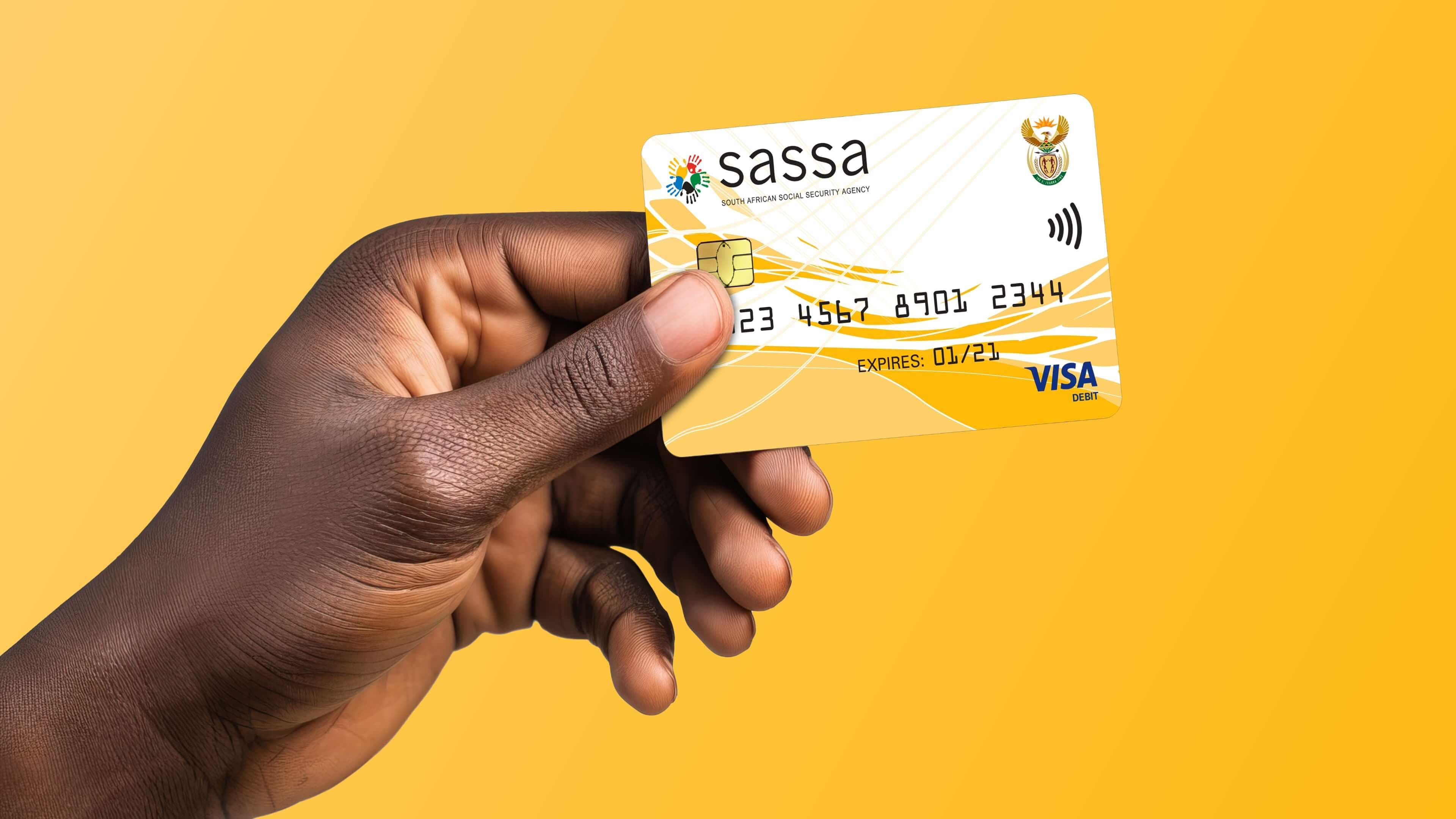
SASSA Grant Amounts 2026: Old Age, Disability, Child Support and SRD, With Payment Dates
SASSA pays R2,400 for old age and disability, R580 for child support, R870 for the orphan top-up, and R370 SRD in October 2026, plus this month's payment dates.
3 Oct 2026 · 8 min read