Urban lifestyles in Kenya are changing fast, and with that comes a growing demand for convenience. More people live in apartments, work long hours, and have limited time to handle daily chores such as washing clothes and bedding.
This shift has created a booming opportunity in the laundry business in Kenya, making it one of the most promising service-based ventures for aspiring entrepreneurs.
From small neighborhood laundromats to full-service dry cleaners, laundry servicesin Kenya are becoming essential.
Customers are willing to pay for clean, fresh clothes delivered quickly and conveniently, which means the business offers both steady demand and strong profit margins.
In this guide, we’ll walk through everything you need to know about how to start a laundry business in Kenya, including startup costs, operations, financial projections, challenges, and strategies for success.
👉 Related read: Profitable Mini Supermarket Business Plan Kenya (With Projections)
Why Start a Laundry Business in Kenya?
The laundry business is attractive for several reasons.
First, it taps into the growing need for convenience among urban dwellers. Professionals and university students in Africa living in apartments often lack washing machines or time to do their own laundry, so they outsource to reliable laundromats.
Second, the business model is flexible. You can start with a small shop serving walk-in customers or go big with a fully equipped dry cleaning service.
Some entrepreneurs even begin from home with one or two machines before expanding into a commercial space. This flexibility allows you to scale at your own pace.
Finally, the laundry business offers consistent and repeat business. Unlike one-off purchases, laundry is a service that customers need weekly or even several times a week. Once you win loyal customers, they keep coming back, providing a steady stream of income.
Complete Laundry Business Plan in Kenya
Conducting Market Research
To start a laundry business in Kenya, the first step is to understand your market. Look at the neighborhood you plan to serve and identify the kind of clients living there.
In areas with middle-class apartments where the working class professionals live, there is usually a strong demand for washing, ironing, and folding services. In higher-income areas, clients may prefer dry cleaning and specialized garment care.
You should also study competitors to see what services they offer and how they price them.
For instance, a typical wash-and-fold service might charge Ksh 200 to 300 per kilogram of clothes, while dry cleaning a suit may cost between Ksh 500 and 1,000.
Knowing these benchmarks helps you position your pricing competitively while identifying opportunities to offer better service.
Estimating Startup Costs for a Laundromat Business
The amount you need to invest in a laundry business in Kenya depends on the scale of your operation.
A small neighborhood laundromat can get started with around Ksh 300,000, while a mid-sized laundromat with industrial machines may require more than Ksh 1 million.
Here’s a breakdown of typical startup costs:
| Expense Item | Estimated Cost (Ksh) |
|---|---|
| Shop rent & deposit (2–3 months) | 60,000 – 150,000 |
| Renovations & fittings | 50,000 – 100,000 |
| Washing machines (2–3 units) | 200,000 – 400,000 |
| Dryers (optional but recommended) | 150,000 – 250,000 |
| Ironing boards & steam irons | 20,000 – 40,000 |
| Detergents, chemicals & supplies | 30,000 – 50,000 |
| Licenses & permits | 15,000 – 30,000 |
| Branding, signage & marketing | 20,000 – 40,000 |
| Working capital (first 2 months) | 50,000 – 100,000 |
| Total Estimated Cost | 595,000 – 1,110,000 |
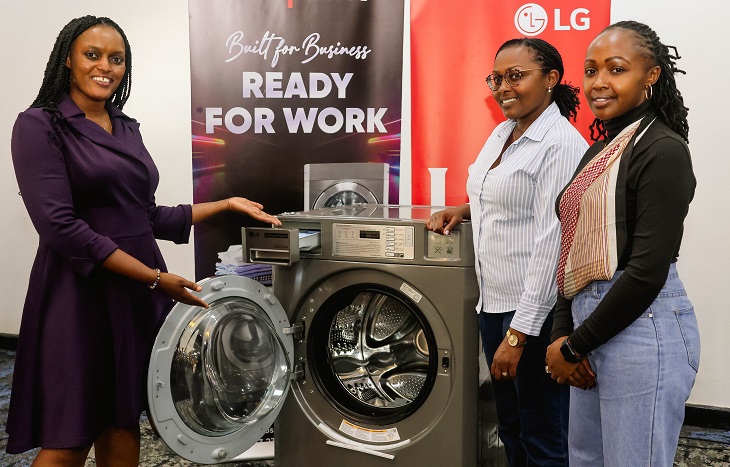
For entrepreneurs with tighter budgets, starting with domestic machines and gradually upgrading to commercial ones is possible. However, commercial machines are more efficient, durable, and cost-effective in the long run.
Getting Permits and Licenses
To operate legally, you’ll need a Single Business Permit from your county government.
Because laundry involves handling chemicals and water, a public health inspection may also be required to ensure compliance with hygiene standards.
Depending on your location, you may also need approvals for water use and wastewater management, especially if you plan to run multiple machines.
These permits can be obtained through your local county offices or via the eCitizen portal.
Setting Up Your Laundry Business
Choosing the right location for your laundry business is critical. A good spot is one that is easily accessible to clients, ideally near residential estates or student hostels.
Visibility matters too—customers are more likely to walk into a shop they can see from the road or a busy walkway.
Your laundromat shop should be organized for efficiency. Machines need proper plumbing and drainage, and there should be adequate space for ironing, folding, and packaging.
Cleanliness is non-negotiable because customers equate a clean shop with quality service. Many successful laundry businesses also invest in packaging materials such as branded bags, which make the service look professional.
Running Day-to-Day Operations
The daily running of a laundry business involves receiving clothes, sorting them, washing or dry cleaning them, ironing, and packaging.
Hiring reliable attendants is essential, as they will interact directly with clients and handle their garments. Staff should be trained to check pockets, separate delicate items, and use the right detergents for different fabrics.
Customer service plays a big role in winning repeat business. Simple gestures such as labeling clothes properly, offering same-day service, or sending SMS notifications when clothes are ready make a huge difference.
Many laundry businesses in Nairobi also add a delivery service, which is especially popular in urban centers where clients prefer convenience.
Financial Projections for a Laundromat: Earnings Potential
The profitability of a laundry business in Kenya depends on location, services offered, and customer volume. Below is an example projection for a mid-sized setup.
| Revenue/Expense | Monthly Estimate (Ksh) | Annual Estimate (Ksh) |
|---|---|---|
| Average daily clients (15) × Avg. spend (Ksh 500) | 225,000 | 2,700,000 |
| Staff salaries (3 attendants) | 60,000 | 720,000 |
| Rent & utilities | 40,000 | 480,000 |
| Supplies & detergents | 30,000 | 360,000 |
| Marketing & other costs | 15,000 | 180,000 |
| Net Profit | 80,000 | 960,000 |
From these figures, it is clear that a well-run laundry shop can generate monthly profits of between Ksh 70,000 and Ksh 100,000. With consistent customer flow, the business can recover its initial investment within the first six months.
Risks and Challenges
Like any service business, the laundry business sector faces certain challenges. Competition is high in urban centers like Nairobi, with new shops opening regularly.
To stand out, you must offer faster turnaround times, better customer service, or value-added services such as delivery.
Operational costs for a laundromat can also be unpredictable. Water and electricity bills can rise significantly, especially when using multiple machines.
Equipment breakdowns are another risk, as washing machines and dryers require regular maintenance and sometimes costly repairs.
Finally, trust is a big factor. Clients are entrusting you with valuable clothes, and any damage or loss can quickly ruin your reputation. Strict handling processes and transparent communication are essential to avoid disputes.
Tips for Laundry Business Success
To succeed in the laundry business, focus on building strong relationships with your customers. Clients who feel their clothes are handled with care are more likely to return and recommend your services.
Offering loyalty programs, discounts for frequent users, or convenient delivery can also help you retain customers.
Investing in efficient equipment is another success factor. Machines that wash faster and use less water or electricity reduce costs and improve turnaround times.
At the same time, training staff on how to handle delicate fabrics or stains ensures high-quality results that keep customers satisfied.
Marketing should not be overlooked. Word-of-mouth referrals are powerful, but combining them with digital marketing—such as promoting your business on Instagram or even Google My Business—can help you reach more people in your area.
Professional branding, clean uniforms, and consistent packaging also create an image of reliability and professionalism.
Conclusion
The laundry business in Kenya is a service that will always be in demand.
If you are serious about starting, begin with thorough market research and a clear laundry business plan. Once you establish your footing, the opportunities for growth are endless.
👉 For more guidance, check out our resources on profitable businesses in Kenya. You can also visit the eCitizen portal for licensing details and the KNBS website for useful statistics on household consumption patterns.