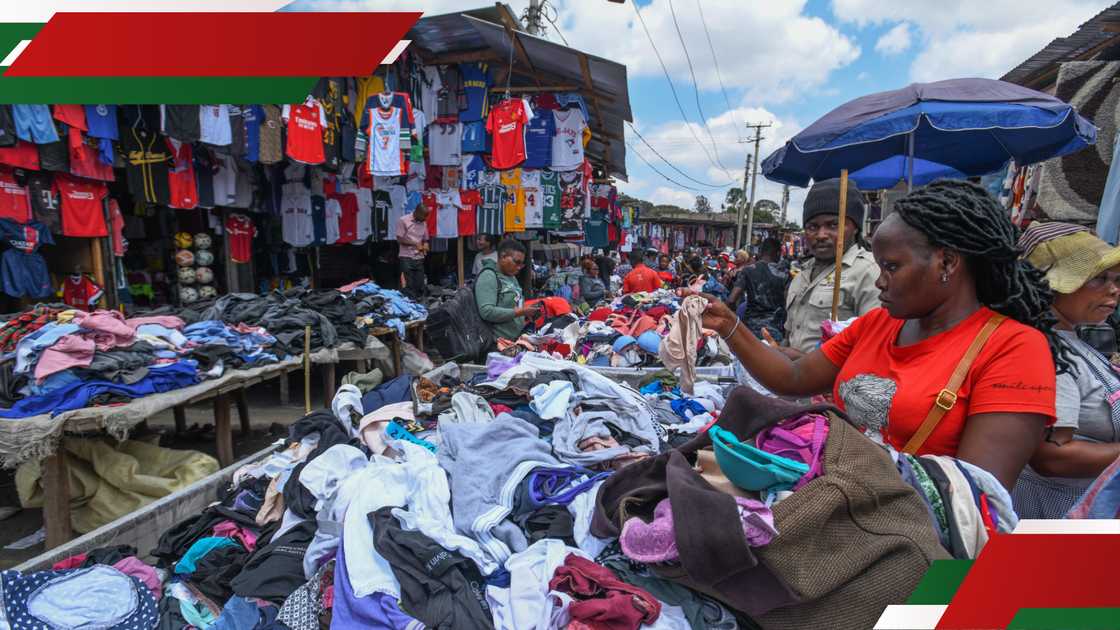
Mitumba (thrift clothes) is one of Kenya’s most resilient small businesses: low startup capital, fast inventory turnover, and steady demand from price-sensitive shoppers and niche buyers alike.
Whether you want to sell mitumba clothes on Tiktok, open a stall in Gikomba, or import and sort whole bales, this guide gives you a practical, up-to-date business plan for a mitumba business in Kenya — including how to start a mitumba business, setup costs, realistic profit projections, risks, and tactical tips that actually work in 2025.
👉 Related reading: Profitable Side Hustles You Can Start in Nairobi With Less Than Ksh 5000
Why Start a Mitumba Business in Kenya
- Huge local demand. Second-hand clothes remain a primary clothing source for many Kenyans — affordable and varied. Trade data and market reports show imports and local demand have been rising in recent years.
- Low barrier to entry. You can start by kuchagua (hand-picking) or from a single bale — both are common entry paths and scaleable. Local sellers often begin with KShs in the low thousands.
- High margins when you know sourcing and grading. Proper sorting, cleaning, and targeted pricing let sellers turn cheap bales into strong markups. Recent bale price listings show wide ranges by grade and category.
Quick overview: Two common entry models
- Kuchagua (pick-and-sell): Buy individual items or small bundles, sell directly — good for very low capital (KSh 1,000–10,000).
- Bale-based trading: Buy full bales (mixed, kids, jackets, shoes, sheets) and sort for retail/wholesale. Bale prices vary widely by grade and type (roughly KSh 7,000 → 35,000+ per bale depending on quality and contents).
Step-by-step Mitumba Business Plan
Do tight market research (don’t guess)
Before you start a mitumba business, visit local markets such as Gikomba, Toi, and Kongowea to see which mitumba clothes sell fast and at what prices.
Spot differences between neighborhoods: students, boda-boda riders, office workers, boutique buyers. Many Kenyans who start a mitumba business split stock across channels: market stall + WhatsApp/Instagram + Tiktok
👉 Related reading: How to Make Money Online Using Just Your Phone
Decide your model & niche
Pick a focus that matches demand and your ability to grade:
- Premium (a.k.a camera) branded clothing (higher margin, needs better bales).
- Everyday wear / mixed bales (fast sell-through).
- Kids / baby clothes (fast movers).
- Home textiles (sheets, towels) or shoes (special handling).Suppliers often list specific bale categories — choose 2–3 to start.
Sourcing: where to buy stock
- Local wholesale markets: Gikomba (Nairobi), Kongowea (Mombasa), Toi — buy bales or selected lots.
- Direct importers & bale sellers: Several businesses now sell bales online or from warehouses; prices and grades are advertised. If you import, expect container-level complexity and customs processes.
Legal & import basics (if you import)
If you plan to import mitumba bales in containers: get a licensed customs clearing agent, submit an Import Declaration Form (IDF), and comply with Kenya Bureau of Standards (KEBS) requirements.
Large mitumba bale imports can carry significant customs, duty, and clearance costs — a single mitumba container’s clearance can run into hundreds of thousands depending on volume.
For most Kenyan small business starters, buying locally from established bale sellers avoids big upfront costs.
Site, stall or online set-up
- Stall/market space: Rent a stall or table in a busy market — negotiate rent & days charged.
- Shopfront: If you have capital, a small shop near estates or student hostels works well.
- Online & hybrid: Use WhatsApp groups, Instagram, TikTok & Facebook to showcase curated bundles and take orders — many mitumba sellers earn most revenue online.
👉 Related reading: 10 Easy Weekend Side Hustles for Working Professionals in Africa
Sorting, cleaning & quality control
Sort your mitumba clothes bale immediately into categories: sellable items, repairable, reject. Clean and steam or spot-treat stains where necessary. Good sorting multiplies your revenue per bale; poor sorting kills margins.
Pricing & sales channels
Set prices per piece by category (example ranges: KSh 150–500 for everyday items; KSh 700–2,500 for branded finds). Offer bundles (e.g., 3 items for KSh X), and create weekday deals. Combine market selling with curated online posts for higher-value items.
8) Record keeping & simple KPIs
Track:
- Cost per bale / item
- Number of sellable pieces per bale
- Average sale price per piece
- Days-to-sell per item
Mitumba Business Startup cost breakdown — sample (1-bale retail model)
| Item | Estimate (KSh) |
| 1 medium-grade bale (local) | 20,000 |
| Transport from supplier to stall/warehouse | 3,500 |
| Stall rent deposit / short-term rent (first month) | 10,000 |
| Cleaning / detergents / steaming (initial) | 2,500 |
| Sorting supplies (tables, bins, tags) | 5,000 |
| Packaging / plastic bags / labels | 2,000 |
| Marketing (WhatsApp/Instagram ads, flyers) | 3,000 |
| Working capital (cash float) | 5,000 |
| Miscellaneous | 2,000 |
| Total Estimated Startup Cost | KSh 53,000 |
Mitumba Business Financial projection — 2-bale monthly turnover example
| Item | Monthly (KSh) | Annual (KSh) |
| Revenue (2 bales × 250 pcs × KSh 300) | 150,000 | 1,800,000 |
| Cost of goods sold (2 bales @ KSh 20,000) | -40,000 | -480,000 |
| Transport, rent, utilities, cleaning | -20,000 | -240,000 |
| Marketing & phone | -3,000 | -36,000 |
| Packaging & supplies | -4,000 | -48,000 |
| Labor / assistant | -12,000 | -144,000 |
| Estimated Net Profit | 71,000 | 852,000 |
Risks, policy & ethical considerations
- Policy shifts & import controls. The mitumba business in Kenya is politically sensitive. Government discussions on banning imports to support local textiles occasionally arise (Nation Africa coverage).
- Quality & returns risk. Not every bale yields high sellable counts.
- Reputation & hygiene concerns. Buyers may worry about hygiene — address this through visible cleaning and transparent communication.
Can I start a mitumba business with just KSh 1,000?
Yes — with kuchagua you can buy single items or tiny bundles, then resell via WhatsApp, Tiktok, or a stall. It’s slow but low-risk. Read our guide on profitable side hustles in Nairobi with less than KSh 5,000
How much does a bale cost in Kenya today?
Bale prices vary by grade and type — roughly KSh 7,000 (lower-grade) up to KSh 30,000+ for premium bales. Always ask about contents and sellable counts.
Is importing mitumba containers worth it for beginners?
Not usually. Imports mean larger capital, customs clearance, and logistics complexity. Beginners should start locally from trusted bale sellers.
How much can I earn per mtumba bale?
A 250-piece sellable bale sold at KSh 300 per item yields KSh 75,000 revenue. Minus costs, profits remain attractive if quality is high.
Where are the best places to buy mitumba in Kenya?
Gikomba (Nairobi), Toi (Kibera), and Kongowea (Mombasa) are major markets. Some suppliers also sell via online warehouses.
What are quick ways to increase profits in a mitumba business?
Sell premium branded finds online (a.k.a camera), focus on fast-moving categories (kids wear), and clean/iron high-value pieces for higher markups.
Conclusion
Mitumba is a low-barrier, high-demand business in Kenya. With careful supplier selection, good bale grading, and strong online sales, you can turn small capital into sustainable profit. Start small, test suppliers, and reinvest to scale.