How to Buy Shares on the Dar es Salaam Stock Exchange (DSE)
DSE shares need a CDS account with a licensed broker and cost up to 2.3768% in fees. Here is how to open one, place an order and what tax you will pay.

In this guide▾
- Quick facts: buying shares on the DSE
- What a CDS account actually is
- How to buy shares on the DSE: step by step
- How much does it cost to trade?
- Buying through the Hisa Kiganjani app or USSD
- Dividends and capital gains: the tax side
- Who can buy, and what else is on offer
- What to watch out for
- Frequently asked questions
To buy shares on the Dar es Salaam Stock Exchange (DSE), you open a CDS (securities) account with a licensed stockbroker, known as a Licensed Dealing Member, provide your NIDA ID and TIN, then place buy orders through the broker, the Hisa Kiganjani app or USSD code 15200#. There's no minimum amount: you can buy a single share. The only real cost is brokerage, capped at 2.3768% of the trade value, and a filled order settles in three working days (T+3). This is current as of October 2026, checked against the DSE's own site.
Quick facts: buying shares on the DSE
| What | Detail |
|---|---|
| Where to open an account | Any Licensed Dealing Member (stockbroker) — 24 are currently licensed |
| Documents needed | NIDA ID (or passport for non-citizens), TIN, bank account details |
| Minimum investment | None set by the DSE; buy as many or as few shares as you can afford |
| How to place orders | Through your broker directly, the Hisa Kiganjani app, web access, or USSD 15200# |
| Maximum brokerage fees | 2.3768% of the trade value (brokerage, DSE, CMSA, CDS and Fidelity fees combined) |
| Trading hours | 10:00 AM to 4:00 PM, trading days only |
| Settlement | T+3 (3 working days after the trade) |
| Dividend withholding tax | 5% on DSE-listed company dividends, vs 10% on other Tanzanian dividends |
| Capital gains tax | DSE-listed shares held by a resident are exempt |
What a CDS account actually is
Every share traded on the DSE exists electronically, not as a paper certificate. The record of who owns what sits in the Central Depository System, and your personal slice of it is your CDS account — sometimes called a CSD or CSDR account. You can't open one directly with the exchange; it has to go through a Licensed Dealing Member, which is the DSE's formal name for a stockbroking firm (DSE FAQs).
This is a different CDS account from the one you'd open to bid for Treasury bonds. Bonds run through a Central Depository Participant — usually a bank — under Bank of Tanzania rules. Shares run through a Licensed Dealing Member — a stockbroker — under DSE and Capital Markets and Securities Authority (CMSA) rules. The documents you provide are nearly identical, but the two accounts aren't interchangeable, and some brokers who are also CDPs can open both for you in one visit.
How to buy shares on the DSE: step by step
- Get your TIN and NIDA ID sorted first. Brokers ask for both as standard identification. If you don't have a TIN yet, get one free from TRA; if your NIDA registration isn't complete, sort that before you apply, since account opening stalls without it.
- Pick a Licensed Dealing Member. The DSE lists 24 of them, from established names like Tanzania Securities, Solomon Stockbrokers, CORE Securities and Orbit Securities, to bank-linked brokers such as Stanbic Bank (T) and CRDB Bank (full list with contacts). Several, including Orbit Securities, now let you apply online by uploading your ID and filling in a form rather than visiting a branch.
- Open your CDS account. You'll fill a client information form and hand over your NIDA number (or passport if you're not a Tanzanian citizen), your TIN, and your settlement bank account details. Your broker runs this as KYC (Know Your Customer) checks before the account goes live.
- Fund your trading account. Your broker gives you a trust account to pay into before you trade. If you're using the Hisa Kiganjani mobile app, you instead get a control number valid for 24 hours to make the payment.
- Place your order. Give your broker the company (by its DSE code — CRDB, NMB, VODA, TBL and so on), the number of shares, and whether it's a limit order (your price) or a market order (the best price available). You can also place this yourself through the Hisa Kiganjani mobile trading app, web access, or USSD (more on this below).
- Wait for settlement. Trades settle electronically through the CDS in three working days (T+3). New MTP accounts can take about 10 minutes to be authorised before their first order goes through.
How much does it cost to trade?
The DSE caps total brokerage fees at 2.3768% of the value of any trade. That one figure covers the broker's own commission plus DSE, CMSA, CDS and Fidelity Fund charges — there's no separate list of each slice, and brokers can't exceed the cap (DSE FAQs, cited above).
Say you put TZS 300,000 into CRDB Bank shares. At the maximum rate, brokerage costs about TZS 7,130, leaving roughly TZS 292,870 actually invested. Selling later carries the same maximum fee on the sale value.
There's no DSE rule setting a minimum number of shares per trade — the exchange says you can buy or sell any quantity. In practice, a few brokers still quote their main trading board in lots of 10 shares and route smaller "odd lot" orders separately, so ask your broker how they handle a single-share order before you place one.
Buying through the Hisa Kiganjani app or USSD
The DSE's own Mobile Trading Platform, branded Hisa Kiganjani, lets you open a CDS account and place buy and sell orders without visiting a broker's office. It's on the Google Play Store and Apple App Store under "Hisa Kiganjani" or "Mobile Trading Platform", with web access at investor.dse.co.tz, and a USSD option on 15200# for phones without a data connection. Orders you place still route to your chosen Licensed Dealing Member — the app is a front end, not a separate broker.
Dividends and capital gains: the tax side
Dividends from a company listed on the DSE are taxed at a 5% withholding rate, lower than the 10% standard rate on dividends from unlisted Tanzanian companies — a built-in incentive to hold listed shares rather than private ones (PwC Tanzania withholding tax summary, reviewed September 2026). The tax is deducted at source, so what lands in your account is already net.
Better still, gains you make selling DSE-listed shares are exempt from tax if you're a resident. Non-resident investors get the same exemption as long as they hold less than 25% of the company; above that stake, gains become taxable (PwC Tanzania individual tax summary, reviewed September 2026). That 25% line only matters if you're buying a controlling stake in one company — most individual investors, resident or not, never come close to it.
Who can buy, and what else is on offer
Tanzanian citizens, East Africans and other foreign investors can all open CDS accounts and buy DSE shares, though a handful of listed companies apply their own limits on foreign shareholding under CMSA rules — your broker will tell you if a counter you want is capped. Twenty-eight companies trade on the DSE, spanning banks (CRDB, NMB, Stanbic), telecoms (Vodacom Tanzania), brewers (TBL), and smaller counters like DCB Commercial Bank and Mwalimu Commercial Bank.
If TZS 300,000 feels like a lot to put behind one company, you don't have to start with individual shares. UTT AMIS unit trusts spread your money across a basket of assets from as little as TZS 5,000 via M-Pesa, and buying government bonds instead is a fixed-income alternative from TZS 1,000,000, through its own CDS account and CDP broker. Run the numbers on what compounding does to any of these over time with our compound interest calculator.
What to watch out for
- Don't confuse a broker's own app or website with the real thing. Deal only with firms on the DSE's own Licensed Dealing Members list; if a "broker" isn't on it, your money isn't protected by CMSA rules.
- A hot tip isn't research. Prices move on real demand and supply, and Sarah has watched people buy on a rumour and sell at a loss weeks later. Check a company's actual financials and dividend history before buying, not a WhatsApp group's enthusiasm.
- Don't send money anywhere except your broker's named trust account or MTP control number. Scammers impersonate brokers on social media and ask for payment to a personal M-Pesa or bank number — a licensed broker never does this.
- Thin trading means wide price gaps. Several DSE counters trade in small volumes most days, so a market order can fill at a worse price than you expected. Use a limit order if the share doesn't trade often.
- Keep your CDS statement. It's your proof of ownership and what your broker and TRA will refer to if there's ever a dispute over your holding.
Frequently asked questions
Do I need a lot of money to start buying DSE shares?
No. The DSE sets no minimum investment, and you can buy a single share if a broker will process the order. What limits you in practice is the share price itself and the 2.3768% maximum brokerage fee, which eats a bigger share of very small trades.
Can I buy DSE shares without visiting a broker's office?
Yes. Several Licensed Dealing Members, including Orbit Securities, let you open a CDS account online with a photo of your NIDA ID or passport. Once it's open, you trade through the Hisa Kiganjani app, web access, or USSD 15200#.
Is a CDS account for shares the same one I'd use for Treasury bonds?
No. Shares use a CDS account opened through a Licensed Dealing Member under DSE and CMSA rules. Treasury bonds use a separate CDS account opened through a Central Depository Participant, usually a bank, under Bank of Tanzania rules. The identity documents required are the same, but the accounts are different.
How long does it take to get my money after selling shares?
Trades settle electronically in three working days (T+3). Your broker pays the proceeds into your linked settlement bank account once the trade settles.
Do I pay tax on dividends and profits from DSE shares?
Dividends are taxed at a 5% withholding rate, deducted before you receive the money. Capital gains on DSE-listed shares are exempt from tax for residents, and for non-residents holding less than 25% of the company.
Can foreigners and diaspora Tanzanians buy shares on the DSE?
Yes, through the same CDS account process as residents. A small number of counters carry their own foreign-ownership limits under CMSA rules, so ask your broker whether the specific company you want is affected before you place an order.
Keep reading
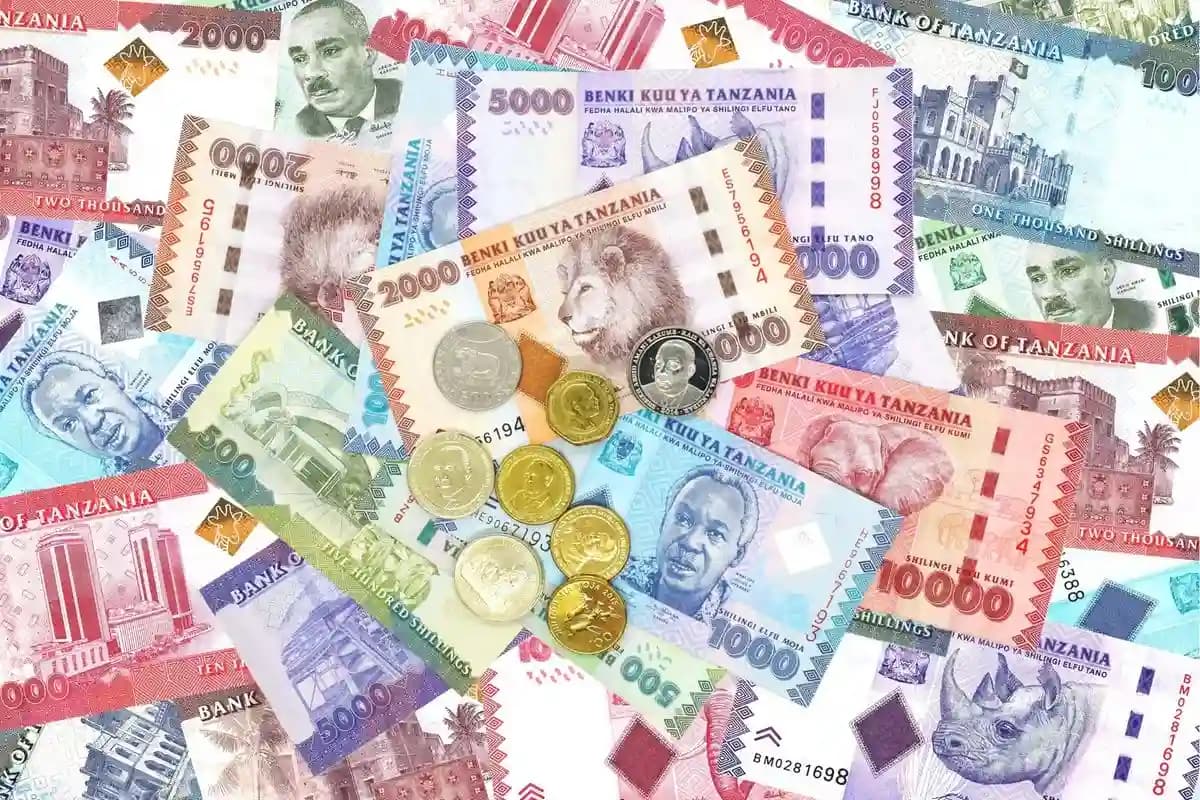
How to Buy Treasury Bonds in Tanzania: Bank of Tanzania Auctions in 2026
Buy Tanzania Treasury bonds from TZS 1 million through Bank of Tanzania auctions: current coupon rates, tax rules and CDS account steps, checked October 2026.
20 Oct 2026 · 9 min read
UTT AMIS Explained: How to Open an Account, Deposit via M-Pesa and Which Fund to Pick
UTT AMIS lets you invest in Tanzania's unit trusts from TZS 5,000 via M-Pesa or Airtel Money. Minimums, returns and account steps, checked October 2026.
11 Oct 2026 · 9 min read
Bill of Quantities for a 3-Bedroom House in Kenya (2026): Every Material, Phase by Phase
What a bill of quantities for a typical 3-bedroom bungalow in Kenya covers: the share of the budget each building phase takes, every material on the list, and how to get the exact quantities for your plan.
20 Oct 2026 · 5 min read