Unit Trusts in South Africa: How They Work, Fees and How to Start With R500
You can start a unit trust in South Africa for R500 a month, or no minimum at all on some platforms. See what it costs, how it's taxed and how to choose one.


In this guide▾
A unit trust pools your money with other investors' into a basket of shares, bonds or cash, run by a professional manager. In South Africa you can start one from R500 a month, and on some platforms with no minimum at all.
What you keep at the end depends on two things most people never check: the fund's annual fee, and what SARS takes outside a tax-free account. Below: what unit trusts cost right now, how they're taxed in the 2026/27 tax year, and how to pick one without guessing.
What exactly is a unit trust?
You buy "units" in a pooled fund. The fund manager invests that pool in shares, government and corporate bonds, property or cash, depending on the fund's mandate, and your units rise or fall in value with the underlying assets.
Unit trusts are collective investment schemes, regulated under the Collective Investment Schemes Control Act (CISCA), Act 45 of 2002. The Financial Sector Conduct Authority (FSCA) supervises the managers, and the industry body ASISA sets best-practice standards most managers follow.
Your money isn't held by the fund manager itself. An independent trustee, legally barred from being the manager's subsidiary, holds the underlying shares and bonds in the fund's name, separate from the manager's own balance sheet. If a manager runs into financial trouble, your units aren't part of what its creditors can claim. The risk you can't avoid is market risk: a unit trust invested in shares still falls when the stock market falls.
How much do you need to start a unit trust in South Africa?
Less than most people assume. Here's what the big managers and platforms require, checked in October 2026:
| Provider | Minimum lump sum | Minimum monthly debit order |
|---|---|---|
| EasyEquities | None | None |
| Coronation | R5,000 | R500 |
| Old Mutual | R10,000 (or R500/month, per fund) | R500 |
| Allan Gray | R50,000 alone, or R10,000 with a debit order | R1,000 (with the R10,000 lump sum) |
Minimums checked directly with each provider: Coronation, Old Mutual's fund list, Allan Gray's FAQ and EasyEquities' support site.
If R500 a month is all you have, Coronation and Old Mutual take it straight into most of their funds. If you want to start with less, or test the waters with a single R100 or R200 before committing to a debit order, EasyEquities charges no minimum and no monthly platform fee beyond its 0.25% platform charge.
Old Mutual also runs a prescribed minimum balance rule: funds that sit below R10,000 for long without a R500 monthly debit order running can attract a separate low-balance charge, so don't open a fund with a once-off R500 and leave it there.
What do unit trusts cost you?
Every unit trust charges an annual fee, usually shown as a Total Expense Ratio (TER), deducted from the fund's value before you see your return. You never get a bill for it. It's just quietly taken off your growth.
Fees vary a lot by fund type:
- Index-tracking funds that simply copy a market like the JSE Top 40 charge the least. Satrix's JSE Global Equity index fund, for example, carries a 0.15% annual management fee.
- Low-cost actively managed funds: 10X's Prime High Equity Unit Trust charges 0.5% a year (0.3% once your balance passes R10 million), with no separate admin or performance fee on top, according to 10X's own FAQ.
- Mainstream actively managed funds cost more. Old Mutual's own fund list, as at June 2025, shows total investment charges (TER plus transaction costs, including VAT) of around 1.55% to 1.85% a year on its growth-oriented funds.
Say you put R500 a month into a balanced fund for the long haul. A fund charging 0.5% a year keeps noticeably more of your growth over time than one charging 1.8%, purely from the fee, before either manager has shown any skill. Run your own numbers on our compound interest calculator before you pick a fund on brand name alone.
Ask for the fund's current Minimum Disclosure Document (MDD) before you invest. It lists the TER, transaction costs and total investment charge for the last 1 and 3 years, and every manager has to publish one.
Are unit trusts tax free in South Africa?
No, not by default. A unit trust held outside a tax-free account is taxed like any other investment, in three ways, as of the 2026/27 tax year (1 March 2026 to 28 February 2027):
- Dividends tax: Local dividends your fund receives are taxed at 20% before they reach you. The fund withholds it and pays SARS directly, so the number you see is already net.
- Interest: Interest the fund earns is tax-free up to R23,800 a year if you're under 65, or R34,500 a year if you're 65 or older, under SARS's annual interest exemption. Interest above that is added to your taxable income.
- Capital gains: When you sell or switch units for a profit, the first R50,000 of capital gain in a tax year is excluded. Above that, 40% of the gain is added to your taxable income, which works out to a maximum effective rate of 18% for individuals.
If investment income (interest, dividends, foreign dividends, rental income) and any income from an employer that doesn't deduct PAYE together come to more than R30,000 in a tax year, you may need to register and pay provisional tax, not just wait for your annual return. Our provisional tax guide for freelancers and side hustlers walks through how that works.
The tax-free way round all of this: hold the same unit trust inside a Tax-Free Savings Account (TFSA). You pay no dividends tax, no tax on interest and no CGT on anything inside it, ever, up to a contribution limit of R46,000 a year for the 2026/27 tax year. Go over that limit and SARS charges a 40% penalty on the excess, so track what you've put in. See our best TFSA accounts in South Africa guide for providers and limits in full.
A retirement annuity is the other tax-advantaged option, with contributions themselves deductible from your income tax, but your money is locked up until 55. Compare the two in our retirement annuity guide before you choose where new money goes.
Picking a unit trust that fits you
ASISA groups funds by what they hold and how much risk that carries. In order of rising risk and, usually, rising long-term return:
- Money market funds: cash and short-term paper. Capital is stable, returns track the repo rate, fees are the lowest. Good for money you need within a year or two.
- Income and bond funds: mostly bonds. More return than money market, more ups and downs.
- Multi-asset (balanced) funds: a mix of shares, bonds, property and cash, rebalanced by the manager. The default choice for most people saving for 5+ years who don't want to pick shares themselves.
- Equity funds: mostly shares, local or global. The highest long-term return potential, and the most painful short-term drops. Only for money you won't need for 7-10 years or more.
If you'd rather pick the individual companies yourself instead of paying a manager to do it, see our guide on how to buy JSE shares directly for the costs and steps.
Decide your time horizon first, then pick the category, then compare TERs and 5-year performance within that category rather than across categories. A cheap money market fund will never beat an expensive equity fund over ten years, and an expensive equity fund can still lose to a cheap one over the same period.
Mistakes that cost unit trust investors money
Chasing last year's winner. The fund that topped the performance tables last year is rarely the one that tops them next year. Pick the category that matches your time horizon and risk appetite first, not whichever fund made headlines.
Ignoring the TER because the fund "did well". A fund that returned 12% with a 2% TER gave you less than a fund that returned 11% with a 0.5% TER, after costs. Always compare net, not headline, performance.
Stopping the debit order the moment markets drop. Unit trust values move with the market. Selling after a fall locks in the loss; continuing to buy units at a lower price is what makes the recovery work in your favour.
Forgetting the tax-free wrapper exists. Many people put money into an ordinary unit trust for years, paying dividends tax and CGT along the way, without realising the same fund is available inside a TFSA at zero tax. Check before you open a new account which one you're opening.
For more ways to grow and protect your money, see our full lineup of South Africa money guides.
Frequently asked questions
Are unit trusts tax free in South Africa?
Not by default. You pay 20% dividends tax on local dividends the fund earns, tax on interest above R23,800 a year (R34,500 if you're 65+), and capital gains tax above a R50,000 annual exclusion when you sell. Holding the same fund inside a Tax-Free Savings Account removes all three.
What is the minimum amount to invest in a unit trust in South Africa?
It depends on the provider. EasyEquities has no minimum at all. Coronation and Old Mutual accept a R500 monthly debit order. Allan Gray needs either a R50,000 lump sum or a R10,000 lump sum plus a R1,000 monthly debit order.
Can I withdraw my unit trust money anytime?
Yes, for an ordinary (non-retirement) unit trust. There's no lock-in period and no penalty for withdrawing. Most managers pay out within a few working days of your request. A unit trust inside a retirement annuity or pension is different and stays locked until you're 55.
Are unit trusts safe if the fund manager fails?
The underlying assets are held by an independent trustee, not the manager, specifically so that a manager's financial trouble doesn't touch your units. What you can't avoid is market risk: if the shares or bonds the fund holds fall in value, your units fall with them, regardless of who manages the fund.
What's the difference between a unit trust and an ETF?
Both pool money into a basket of assets, and many track the same indices. ETFs trade on the stock exchange during the day like a share, with a bid-offer spread, while unit trusts are priced once a day and bought or sold directly through the manager or a platform. Index-tracking versions of both tend to charge similarly low fees; actively managed unit trusts usually cost more than either.
Do I pay tax every year, or only when I sell?
Both. Dividends tax is deducted as the fund earns dividends, and any interest above your exemption is added to your income each year it's earned. Capital gains tax only applies when you sell or switch units for a profit, not while you're simply holding them.
Keep reading

How to Buy JSE Shares as a Beginner: Apps, Fees and Your First Trade
You can buy JSE shares yourself through an app like EasyEquities for about 0.63% in total fees, starting from R5, with no stockbroker required.
1 Nov 2026 · 10 min read

Best Retirement Annuity in South Africa: How RAs Work, Tax Benefits and Choosing a Provider
See how a South African retirement annuity cuts your tax bill, when you can access it, and how to compare providers on real cost instead of marketing.
25 Oct 2026 · 10 min read
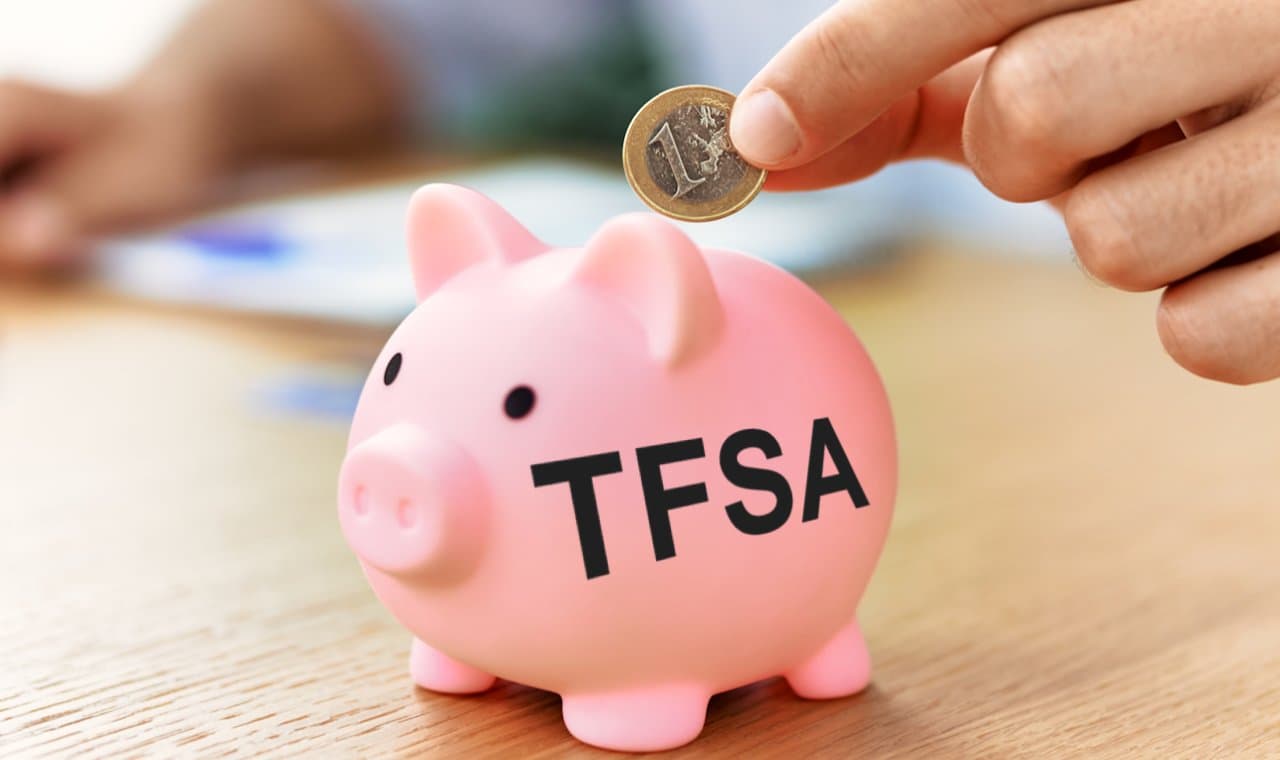
Best TFSA South Africa 2026: Why EasyEquities Beats SatrixNOW and Allan Gray
South Africa's TFSA annual limit is R46,000 since March 2026. EasyEquities beats SatrixNOW on ongoing fees. Here's where to open the cheapest one.
7 Oct 2026 · 9 min read