Cost of Building a 3-Bedroom House in Nigeria (Lagos, Abuja and Other States, 2026)
What a 3-bedroom house really costs to build in Nigeria in 2026: per-square-metre rates for Lagos, Abuja and other cities, plus what most estimates leave out.

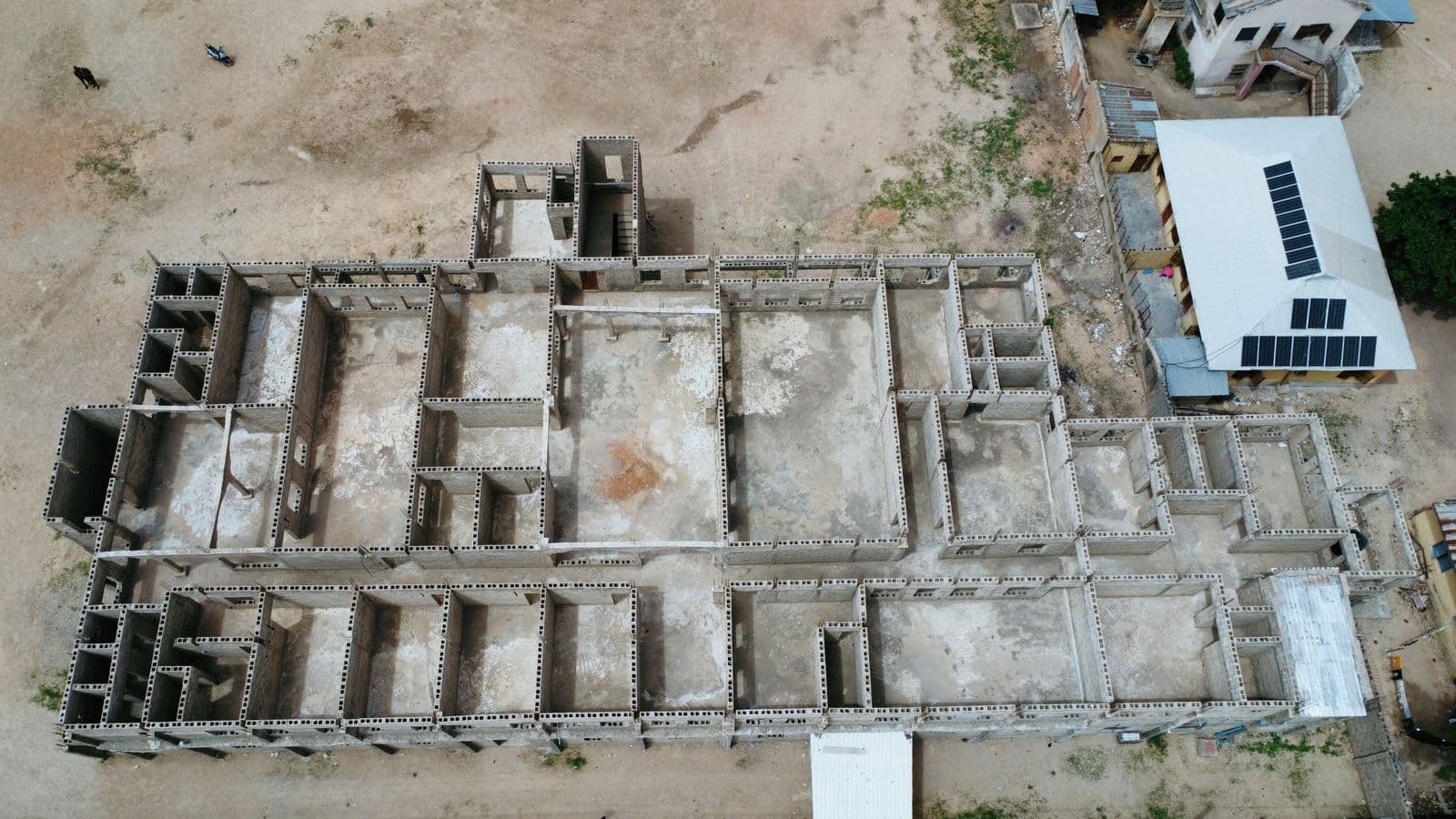
In this guide▾
- How much does it cost per square metre to build in Nigeria?
- Lagos vs Abuja vs other states: where is it cheaper to build?
- What actually goes into the cost: a worked example
- Why material prices keep moving the goalposts
- What these figures leave out
- Saving up while you build
- What to watch out for
- Frequently asked questions
A basic 150 square metre, 3-bedroom bungalow costs roughly ₦9.75 million to ₦13.5 million to build in Lagos as of September 2026, a mid-range version runs ₦14.25 million to ₦21 million, and a premium build with imported fittings can hit ₦24 million to ₦33 million or more — all excluding land, permits and professional fees (Ownkey build cost index, Q2 2026 data). Abuja typically runs 10–15% above those Lagos numbers, while Ibadan, Enugu and Port Harcourt tend to come in 10–25% cheaper for the same spec, though you should still get a local quote before you commit to a figure.
Once you add land, Governor's Consent, permits and professional fees — which the same source says can add another 10–20% — a modest Lagos build easily clears ₦16–18 million before you've bought a single piece of furniture. Verify the title and get consent sorted before you build, not after.
How much does it cost per square metre to build in Nigeria?
| Finish level | Lagos rate (per sqm) | 150 sqm total (Lagos) |
|---|---|---|
| Basic (sandcrete block, standard tiles, basic fittings) | ₦65,000–90,000 | ₦9.75m–13.5m |
| Standard (better block finish, mid-range tiles, branded sanitaryware) | ₦95,000–140,000 | ₦14.25m–21.0m |
| Premium (rendered/cladded finish, imported tiles and fittings, POP ceilings) | ₦160,000–220,000+ | ₦24.0m–33.0m+ |
Source: Ownkey, Q2 2026 Lagos market data, published 30 July 2026. Figures are for a single-storey build on standard footing and exclude land, Governor's Consent, permits, professional fees, fencing and furnishing.
At the official exchange rate of around ₦1,347 to the dollar in late August 2026 (CBN NFEM rate, 25 August 2026), that basic-to-premium range works out to roughly $7,200 to $24,500 — useful if you're sending money home from abroad to fund a build, though check the day's rate before you convert, since the naira moves.
Lagos vs Abuja vs other states: where is it cheaper to build?
Nigeria doesn't have one national building cost — location changes everything, mostly through labour rates, haulage distance from cement and steel plants, and local demand for skilled tradesmen.
| City | Cost vs Lagos | What drives it |
|---|---|---|
| Lagos | Baseline | Highest demand for labour and materials; used as the reference rate above |
| Abuja | 10–15% higher | Premium labour and transport costs into the capital |
| Ibadan, Enugu, Port Harcourt | 10–25% lower | Shorter haulage, lower labour rates than Lagos |
| Smaller towns and rural areas | Lower still | No firm figure published — get at least two local contractor quotes |
Source: Ownkey build cost index, Q2 2026.
One wrinkle: a separate September 2026 cost estimate notes that Lagos, Abuja and Port Harcourt projects "typically face higher labour charges, pricier materials, and greater transport costs" than smaller towns generally (Legit.ng, 9 September 2026) — which isn't a contradiction of the table above so much as a reminder that Port Harcourt is cheaper than Lagos but still pricier than, say, a town in Delta or Imo State. Treat any single percentage as a starting point, not a quote.
What actually goes into the cost: a worked example
Here's a real bill-of-quantities breakdown for a 161 sqm single-storey, 3-bedroom house with a budget specification, built on waterlogged or weak soil that needed a stronger strip foundation. It totals ₦34.83 million, excluding land (Legit.ng, 9 September 2026):
| Item | Cost (₦) | Share of total |
|---|---|---|
| Substructure (foundation to damp-proof course) | 7,366,442 | 21% |
| Superstructure (walling and frame) | 5,346,990 | 15% |
| Roofing and ceiling | 4,219,112 | 12% |
| Finishes and services | 6,216,887 | 18% |
| External works (fence, borehole, generator house, water tank, driveway) | 1,978,200 | 6% |
| Contingency (10%) | 2,512,763 | 7% |
| Contractor profit margin (15%) | 4,146,059 | 12% |
| Site overhead and supervision (7%) | 1,934,828 | 6% |
| Logistics and transport (4%) | 1,105,616 | 3% |
| Total (excluding land) | 34,826,897 | 100% |
Notice this figure already includes fencing, a borehole, a generator house and a driveway — items the Lagos per-square-metre rates above leave out. That's the main reason two "budget" estimates for a similar-sized house can land ₦10 million or more apart: it's rarely the build itself that differs, it's what each quantity surveyor counted in or left out, and whether the site needed extra foundation work for weak ground.
Why material prices keep moving the goalposts
Cement is the clearest example of how fast costs shift. A 50kg bag of Dangote, BUA, Mangal or HBM (formerly Lafarge) cement was selling for about ₦12,000 in a 1 September 2026 dealer survey, with Linma White at ₦14,000 (Legit.ng, 4 September 2026). That's down from a July peak, when CementNet reported Dangote at ₦13,000–15,000 and BUA at ₦12,000–14,500, and The Guardian put typical prices across Lagos, Abuja and Abia at ₦12,500–15,000 — both cited in the same Legit.ng report. Where you buy matters too: dealers further from a cement plant pay more in haulage, and that gets passed on.
The trend through 2026 shows how fast this moves: Dangote and BUA were around ₦10,800–11,500 a bag in a 27 May 2026 price check, climbed to ₦12,500–15,000 by July, then eased back to around ₦12,000 by September (Awajis, updated 27 May 2026; Legit.ng, 4 September 2026). That's a roughly 20–30% swing in four months on one material alone.
If your build runs several months, price your cement and steel in stages rather than assuming the rate you were quoted in month one still holds in month four.
What these figures leave out
Before you set a budget, check which of these your estimate actually covers — most published figures don't:
- Land. Every source in this guide excludes it. Land prices vary enormously by state and even by street, so get this as a separate, current quote.
- Governor's Consent and building permits. Ownkey's figures above add 10–20% on top of the build cost for this and professional fees.
- Professional fees. Architect, structural engineer and quantity surveyor fees are part of that same 10–20%, not included in the per-square-metre rates.
- Fencing, borehole, generator house, water tank, driveway. These are in the Legit.ng breakdown above but not in the Ownkey per-square-metre rates — check which version you're comparing.
- Furnishing. Neither source includes it.
Saving up while you build
Most people building in Nigeria do it in phases as money comes in, rather than with one lump sum upfront. If you're not spending a tranche immediately, parking it somewhere it keeps pace with inflation beats leaving it in a current account. A money market fund gives same-day or next-day access if a contractor needs paying unexpectedly, while Nigerian treasury bills can work for cash you're confident you won't need for 90 days or more.
If you're building to let out rather than live in, treat it as a business from day one: decide early whether you'll run it personally or through a registered entity — CAC registration costs are modest next to what you're about to spend on the building itself. Property is one of the most common ways Nigerians build long-term wealth, and it's worth weighing against the other investing options for Nigeria before you commit this much capital to one asset.
Building is rarely the only money decision happening at the same time — if you're juggling it with tax, savings or side income questions, our guides for Nigeria cover those too.
What to watch out for
- No written bill of quantities. A verbal estimate from a contractor isn't a budget. Get a NIQS-registered quantity surveyor to produce a proper BOQ before you start, the way both sources above did.
- Buying all your cement at once. With prices moving month to month, buying your entire cement requirement upfront locks in today's price — which can work for or against you. Buy in stages matched to what the build actually needs that month.
- Ignoring soil conditions. The ₦34.83 million example above assumed a strip foundation for waterlogged ground. If your site has similar soil, budget more for the substructure than a standard-ground estimate suggests.
- Paying a contractor in full before an inspection. Pay against completed, verified stages (foundation, walls to lintel, roofing, finishes), not against promises.
- Comparing estimates without checking what's included. As shown above, a ₦14 million "standard" quote and a ₦21 million "standard" quote might both be honest — one may include fencing and a borehole, the other might not.
Frequently asked questions
Can I build a 3-bedroom house in Nigeria for ₦10 million?
Only at the very basic end, and only outside Lagos or Abuja. The lowest Lagos figure in current data is about ₦9.75 million for a 150 sqm basic-spec bungalow, excluding land, permits and fees (Ownkey, Q2 2026). Add those extras and ₦10 million rarely covers a complete, livable house in a major city.
How much does it cost to build a 3-bedroom house in Lagos in 2026?
A 150 sqm bungalow runs roughly ₦9.75 million (basic) to ₦33 million or more (premium), excluding land and permits, based on Q2 2026 Lagos rates. A separate September 2026 bill of quantities for a similar-sized house, including fencing and a borehole, came to ₦34.83 million.
Is it cheaper to build in Abuja or Lagos?
Lagos is usually the cheaper of the two. Abuja construction costs typically run 10–15% above Lagos rates for the same specification, mainly because of higher labour and transport costs into the capital.
How much is a bag of cement in Nigeria right now?
Around ₦12,000 for a 50kg bag of Dangote, BUA, Mangal or HBM (Lafarge) cement, based on a 1 September 2026 dealer survey, with Linma White cement at ₦14,000. Prices vary by location because of haulage costs, and they've moved significantly through 2026, so confirm the current rate with a dealer before budgeting.
What costs are usually left out of a building cost estimate?
Land, Governor's Consent and building permits, and professional fees (architect, engineer, quantity surveyor) are the big three. Together they typically add 10–20% on top of the construction cost itself. Furnishing is separate again.
Do I need a registered quantity surveyor to build a house in Nigeria?
You don't need one by law for a private residential build, but both detailed cost breakdowns in this guide recommend getting a NIQS-registered quantity surveyor to produce a bill of quantities for your specific site and spec. It's the only way to turn these national averages into a number you can actually budget against.
Keep reading

How to Verify Land Documents in Nigeria (and Spot a Fake C of O)
Verify a Nigerian land title before you pay: run a ₦3,750 Lagos Lands Bureau search or AGIS check, confirm Governor's Consent, and spot a fake C of O.
18 Oct 2026 · 8 min read

Best Money Market Funds in Nigeria: Current Yields and How to Choose
Coronation leads Nigeria's money market funds at 21% YTD, but CBN's September rate cut means yields are falling. Compare 10 funds, minimums and how to invest.
13 Oct 2026 · 9 min read
How to Buy Treasury Bills in Nigeria: Banks, Apps and What They Pay Now
Buy Treasury bills in Nigeria from ₦100,000 via your bank — not the ₦50,001,000 CBN auction minimum. October 2026 rates, tax and how to calculate returns.
10 Oct 2026 · 11 min read