Cost of Building a 3-Bedroom House in Uganda: Full Breakdown for 2026
Building a 3-bedroom house in Uganda costs UGX 90-150 million in 2026, plus land. See real material prices, tax changes and how to cut costs.

In this guide▾
Building a standard, fully finished 3-bedroom house in Uganda costs UGX 90 million to UGX 150 million, with a more upscale finish pushing it toward UGX 200 million, according to a Business Times Uganda costing published in April 2026. That's for construction alone — land is extra, and it varies hugely by location. Add land in a growing Kampala suburb and the all-in figure for an ordinary family home easily lands between UGX 150 million and UGX 300 million, checked as of October 2026.
How much does it cost to build a 3-bedroom house in Uganda?
| Item | Typical range (2026) | Notes |
|---|---|---|
| Land (12 decimals, growth corridor near Kampala) | UGX 15m–45m+ | Prices in some Wakiso villages roughly tripled after new tarmac roads reached them |
| Construction, standard finish | UGX 90m–150m | Plastered walls, ceiling, basic tiling, ordinary doors and windows |
| Construction, upscale finish | ~UGX 200m | Better tiles, fittings, gypsum ceilings, higher-end sanitary ware |
| Cement, 50kg bag | UGX 28,000–40,000 | Varies by brand and town; rising after the 2026/27 budget |
| Iron sheets, 28–30 gauge | UGX 30,000–65,000 per sheet | Depends on gauge, coating and brand |
| Half bricks (factory-made, Uganda Clays) | UGX 800–1,100 each | 60 pieces cover 1 square metre of wall |
This piece breaks down where that money goes, what pushed prices up this year, and how to keep a 3-bedroom build closer to the bottom of the range than the top.
What a 3-bedroom house actually costs to build
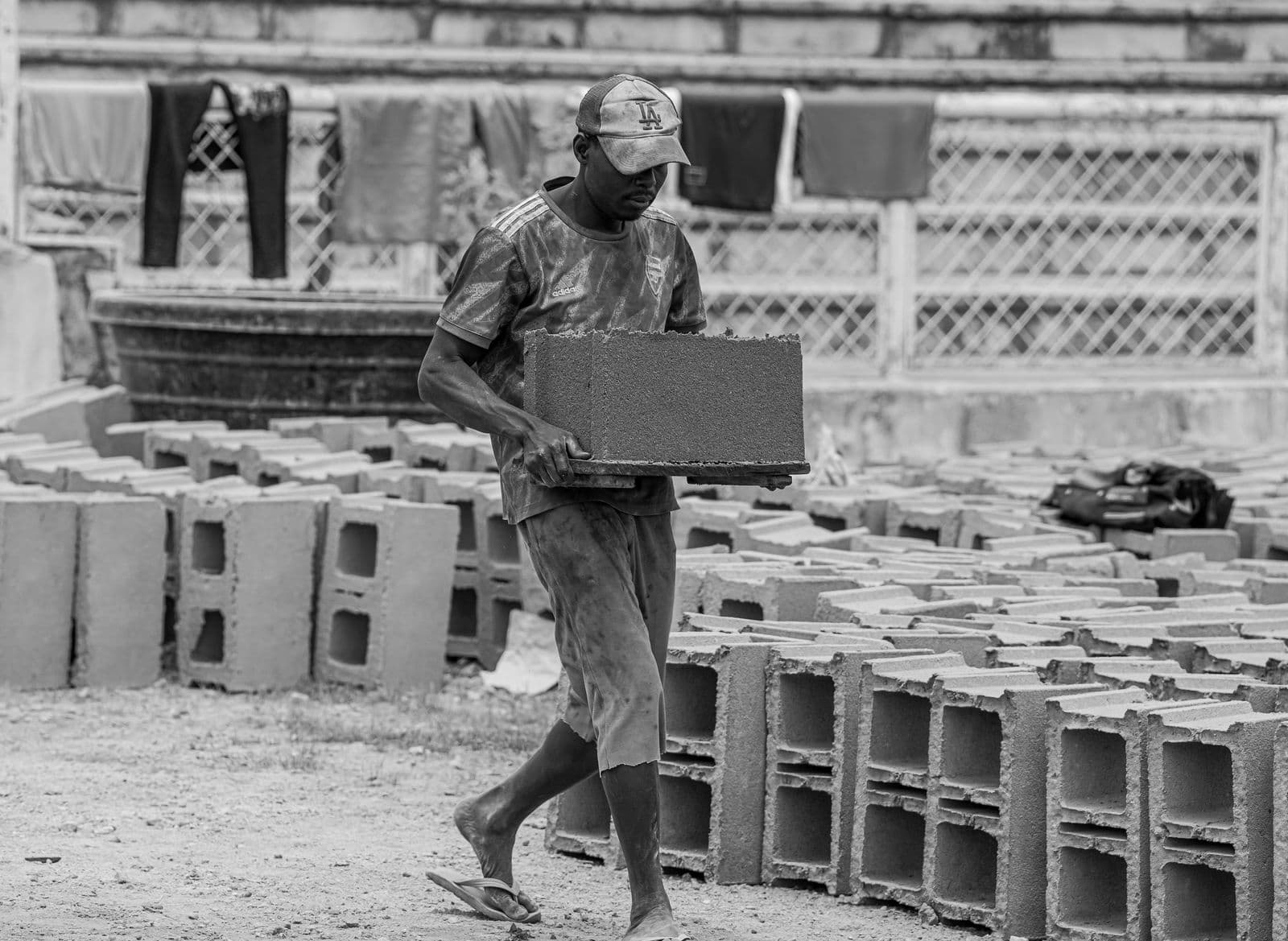
A standard, bungalow-style 3-bedroom house in Uganda — plastered block walls, a mabati or tiled roof, ceramic floor tiles, ordinary doors and windows, and basic plumbing and wiring — runs UGX 90 million to UGX 150 million to construct, according to Business Times Uganda's April 2026 costing of typical Ugandan builds. Push the finishes further, with better tiles, fittings and a gypsum ceiling, and the same footprint can reach UGX 200 million.
Those figures are for construction only. A separate scenario in the same report paired a UGX 80 million plot with a UGX 150 million build for a UGX 230 million total — a useful reminder that land, not bricks, is often the bigger line item once you're close to Kampala.
Where you build changes everything. A plot on Kampala's edge costs a fraction of one in Kololo or Naguru, but once a new road reaches an outlying area, prices move fast. In Lukwanga village, Wakiso District, 12-decimal plots that sold for UGX 15 million to 20 million before a new tarmac road were going for UGX 45 million and above by September 2026, Daily Monitor reported, after the Bukasa-Ssentema-Kakiri road upgrade. The same pattern has played out along other upgraded roads in Mubende-Kagadi and Buikwe — land near a new tarmac road is rarely still cheap a year later.
What drives the cost: materials, labour and land
Building materials
Material prices vary by town and supplier, and they've been climbing. A Daily Monitor price check across several towns in September 2025 found:
- Cement: Tororo Cement at UGX 31,000–32,000 a bag in Mbale and Tororo town, Simba Cement at UGX 28,000 in Mbale, and prices up to UGX 40,000 in Seeta, Mukono — driven by tax measures in the 2025/26 budget and rising fuel costs that push up delivery charges.
- Iron bars: Y12 bars at UGX 38,000 and Y10 bars at UGX 48,000 in Mbale, both up from the previous year.
- Roofing nails: UGX 8,000 per kilo in Tororo, up from UGX 6,000.
For walling, Uganda Clays' price list effective 1 March 2026 puts factory-made half bricks at UGX 800–1,100 each (60 pieces cover a square metre of wall, so expect roughly UGX 48,000–66,000 in brick alone per square metre before mortar and labour). Many builders outside the big towns use cheaper, handmade bricks fired at a local kiln instead — ask two or three suppliers near your site for a current quote, since kiln bricks aren't sold through a published price list and vary by region.
Tax changes to budget for in 2026/27
Uganda's 2026/27 national budget made construction costlier in a couple of specific, confirmed ways. Parliament's Excise Duty (Amendment) Bill, 2026 raised excise duty on cement, adhesives and grout from UGX 500 to UGX 750 per 50kg bag, and added a new duty on paints and varnishes — 3% or UGX 50 per litre, whichever is higher, on locally made products, and 10% or UGX 2,000 per litre on imports. Both took effect on 1 July 2026.
On the relief side, the VAT Amendment Bill, 2026 doubled the VAT registration threshold to UGX 300 million, which should keep more small hardware dealers out of VAT registration and, in theory, keep their shelf prices more competitive.
One change that didn't happen: Parliament's finance committee considered doubling stamp duty on land transfers from 1.5% to 3%, called it too steep a jump, and dropped the increase in September 2026. Land transfer stamp duty stays at 1.5% for now — budget for that rate, not the higher one some earlier reports floated. You assess and pay that stamp duty through URA's own e-tax portal, which needs a TIN to log in — see our guide on finding or generating your URA TIN number online if you don't have one yet.
Budget for the confirmed changes when you price your project in late 2026 — the cement excise increase alone adds UGX 250 to every bag before any supplier markup.
Labour and timeline
Most Ugandan builders reckon a standard 3-bedroom house takes 5 to 9 months from foundation to move-in if money and materials are available throughout — Daily Monitor's home-and-property desk has put the realistic minimum at 5 months and the comfortable target at 7. In practice, many people build in phases over a year or more as savings allow, which is common and not necessarily a problem, but it does mean material prices can move between stages. If you're saving up in instalments before you start, a compound interest calculator can show how much a fixed monthly contribution grows while you wait to break ground, and parking that money in a unit trust fund rather than a current account is one way to earn something on it in the meantime.
How to keep the cost down
- Compare prices across at least three suppliers before buying cement, bricks or iron sheets in bulk — the September 2025 price check above shows the same cement brand costing UGX 28,000 in one town and UGX 40,000 an hour's drive away.
- Buy cement and roofing materials before a known price rise, such as a new budget's effective date, rather than after.
- Keep the design simple. A smaller, rectangular footprint with a simple roof uses less material and labour than an elaborate one, and goes up faster.
- Separate design from supervision. Pay an architect or engineer for the drawings and a bill of quantities up front, then hire a trusted site supervisor rather than leaving a contractor to buy materials unsupervised — material "wastage" on unsupervised sites is a common way budgets blow out.
- Do the finishing work you can do yourself — painting, basic landscaping — and reserve skilled trades (electrical, roofing, plumbing) for qualified people.
- Budget for land separately from the building, and buy early in an area before a road project pushes prices up, if you can confirm the road is actually funded and not just planned.
If you're financing the build through group savings, registering a SACCO in Uganda is one route several building groups use to pool and lend money among members for exactly this kind of project; paying suppliers in bulk is also easier to track once you know the MTN MoMo and Airtel Money charges you'll pay on each transfer. If you'll be pulling large sums out in cash to pay a contractor, note that from 1 January 2027, Bank of Uganda caps over-the-counter cash withdrawals at UGX 50 million a day per individual account, so a UGX 100 million-plus payment needs more than one trip to the bank or a transfer instead. Once the house is up, renting out a spare room or building it as part of a wider plan is one of several investment opportunities in Uganda worth weighing against other options for the same capital.
What to watch out for
- Verbal-only contractor agreements. Get a written scope of work and a bill of quantities before any money changes hands — a named site supervisor you trust is your main defence against material "wastage" once building starts.
- Undersized foundations on swampy or sloping plots. Ground conditions, not house size, often decide foundation cost — have the soil checked before you budget, not after you've poured concrete.
- Buying all your cement or iron sheets at once from one source "to save a trip." Spreading purchases lets you catch a price drop and avoids one bad batch ruining a whole wall.
- Treating a published land price as the asking price. Village-level reports of land tripling in a year, as happened in Lukwanga after its new road, mean the number you heard six months ago may already be out of date.
Frequently asked questions
How much does it cost to build a 3-bedroom house in Uganda in 2026?
A standard, fully finished 3-bedroom house costs roughly UGX 90 million to 150 million to construct, and up to around UGX 200 million with upscale finishes, according to Business Times Uganda's April 2026 costing. Land is extra and depends heavily on location.
How much does a bag of cement cost in Uganda right now?
Prices vary by town and brand, but a September 2025 Daily Monitor check found UGX 28,000–32,000 in most towns and up to UGX 40,000 in some areas like Seeta. The 2026/27 budget raised cement excise duty by UGX 250 per bag on top of that, so expect prices to have moved up since.
Is it cheaper to build upcountry than in Kampala?
Generally yes, mainly because land costs far less away from Kampala and its fast-growing satellite towns. Material prices can actually be slightly higher upcountry in some towns, since transport adds to the delivered cost, but the land saving usually outweighs that.
How long does it take to build a 3-bedroom house in Uganda?
Most builders estimate 5 to 9 months if funds and materials are available throughout construction. Many Ugandans build in phases over a year or more instead, paying for each stage as savings allow. Zimbabweans building from abroad often do the same; see the cost of building a house in Zimbabwe.
Do I need a quantity surveyor or engineer to build a 3-bedroom house?
It isn't legally required for most residential builds, but a bill of quantities from a qualified engineer or quantity surveyor before you start gives you a realistic budget and a way to check a contractor isn't overcharging for materials.
How much extra should I budget for land transfer costs in 2026?
Stamp duty on land transfers stays at 1.5% — Parliament's finance committee considered doubling it to 3% but dropped the increase in September 2026. Budget 1.5% of the land value for stamp duty, plus registration fees, a lawyer's conveyancing fee and a land search.
Keep reading
Best Unit Trusts in Uganda in 2026: Current Rates Compared
Cornerstone pays 15.13% and GenAfrica 14.24% on their Uganda unit trusts, per CMA data for 30 September 2026. Compare all 9 licensed funds and rates.
15 Oct 2026 · 8 min read
How to Register a SACCO in Uganda in 2026: Requirements and Costs
Register a SACCO in Uganda with 30 members and about UGX 65,000 in MTIC fees, then get your UMRA licence before you take savings. Checked October 2026.
11 Oct 2026 · 9 min read
Top Investment Opportunities in Uganda for Small and Medium Investors in 2026
The best investment opportunities in Uganda for small and medium investors in 2026: real returns, minimum amounts, and risks for T-bills, SACCOs and more.
18 Sept 2025 · 12 min read