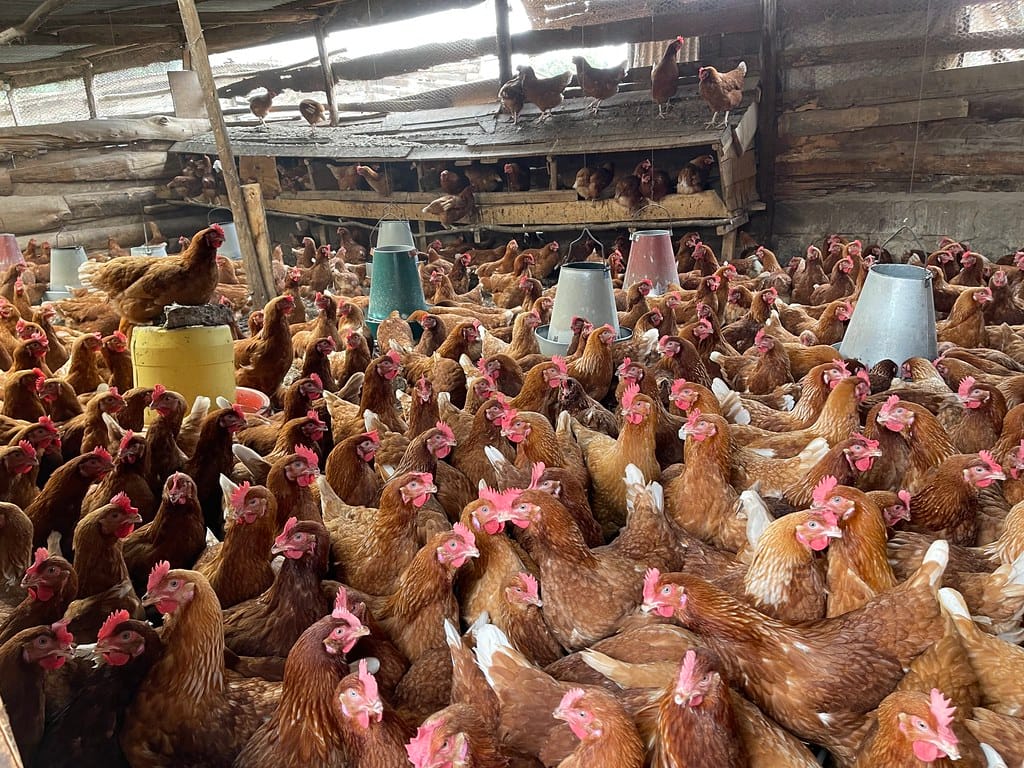
If you’ve ever wondered how to start a business in Kenya with steady demand, poultry farming business should be high on your list.
From chicken meat to eggs, Kenyans consume poultry products daily, making this agribusiness one of the most reliable and profitable ventures in the country. With proper poultry farming business planning, even small-scale farmers can grow into commercial producers serving supermarkets, hotels, and households.
This detailed poultry farming business plan walks you through everything you need to know about starting a poultry farming business in Kenya—from costs, permits, and setup to operations, profits, and challenges.
Why Poultry Farming is a Good Business Idea in Kenya
- High Demand: According to the Kenya National Bureau of Statistics, poultry contributes significantly to household nutrition and income. Eggs and chicken meat are consumed across all income groups.
- Low Startup Capital: Compared to other agricultural ventures, poultry farming requires relatively little land and manageable initial costs.
- Scalability: You can start with 100 birds and scale up to thousands as your market grows.
- Fast Returns: Layers start producing eggs in 4–6 months, while broilers are ready for sale in 5–7 weeks.
👉 Related reading: Best Agricultural Investments in Africa for Young Entrepreneurs
Step-by-Step Guide to Starting Poultry Farming in Kenya
1. Market Research
Before investing in poultry farming business, identify your target customers: local households, restaurants, schools, supermarkets, or open-air markets. Visit nearby farms and assess pricing trends to determine whether to focus on layers (eggs), broilers (meat), or indigenous chickens.
2. Business Registration and Permits
To operate legally, you’ll need:
- A business name from the eCitizen Portal.
- A county government trade license.
- A health and safety inspection for food-related businesses.
- Optional membership in a local poultry farmers’ SACCO for financing and networking.
👉 Related reading: Top SACCOs in Kenya With the Best Dividends in 2025
3. Chicken House Setup
- Ensure proper ventilation and spacing (at least 2 square feet per bird).
- Use durable materials to reduce long-term maintenance costs.
- Install drinkers, feeders, and a reliable water source.
4. Buying Chicks and Feeds
- Source quality chicks from reputable hatcheries such as Kenchic.
- Choose between layers, broilers, or a mix.
- Budget for commercial feeds, which are the largest recurring expense.
5. Day-to-Day Operations
- Maintain strict hygiene and biosecurity to prevent disease outbreaks.
- Monitor feed-to-egg/meat conversion rates.
- Keep records of feed, production, and sales for better financial planning.
Poultry Farming Business Startup Costs in Kenya
Below is an estimated cost breakdown for starting a small-scale poultry farming business with 500 birds:
| Item | Estimated Cost (KES) |
| Land (rent for 1 year) | 30,000 |
| Poultry house construction | 150,000 |
| 500 Day-old chicks | 75,000 |
| Feed (3 months) | 120,000 |
| Equipment (feeders, drinkers, lighting) | 50,000 |
| Vaccinations & vet services | 20,000 |
| Licenses & permits | 10,000 |
| Miscellaneous expenses | 15,000 |
| Total Startup Cost | 470,000 |
👉 Related reading: Profitable Side Hustles You Can Start in Nairobi With Less Than Ksh 5,000
Financial Projections: Poultry Farming Profit in Kenya
Here’s what you can expect from 500 layers producing eggs:
| Revenue/Expense | Monthly (KES) | Annual (KES) |
| Egg sales (450 eggs/day @ Ksh 12) | 162,000 | 1,944,000 |
| Feed & maintenance | -120,000 | -1,440,000 |
| Labor & utilities | -20,000 | -240,000 |
| Miscellaneous expenses | -10,000 | -120,000 |
| Net Profit | 12,000 | 144,000 |
👉 Tip: Scaling to 2,000 birds significantly improves profitability due to economies of scale.
Risks, Challenges, and How to Succeed
Key Risks
- Diseases (e.g., Newcastle, avian influenza).
- High feed costs which account for 60–70% of expenses.
- Market fluctuations in egg and chicken prices.
Tips for Success
- Buy chicks from certified hatcheries.
- Diversify between broilers and layers to spread risk.
- Join poultry associations for training and market access.
- Explore direct sales (e.g., supplying hotels or schools) instead of relying solely on open-air markets.
👉 Related reading: How to Budget for Land on a Low Salary in Africa
Conclusion: Should You Start Poultry Farming Business in Kenya?
Poultry farming is not just profitable—it’s one of the most practical agribusiness ventures in Kenya. With a clear chicken farming business plan, proper biosecurity, and good record keeping, even small farmers can earn a stable income while meeting the country’s rising demand for eggs and meat.
If you’re serious about starting, take the first step today: research your market, prepare your setup, and invest wisely.
👉 Related reading:
- Business Plan for a Mini Supermarket in Kenya (With Financial Projections)
- Mitumba Clothes Business Plan in Kenya (Step-by-Step Guide)
External Resources:
- Kenya National Bureau of Statistics – for agriculture data.
- eCitizen Kenya – for business registration.
- Food and Agriculture Organization (FAO) – for poultry farming guides.
Is poultry farming a profitable business in Kenya?
Yes. Poultry farming is profitable in Kenya if managed well. From our example of 500 layers, farmers can expect about KSh 12,000 monthly profit (KSh 144,000 annually). Scaling to 2,000+ birds increases profitability due to economies of scale.
How much does it cost to start a poultry farm in Kenya?
A small farm with 500 birds requires around KSh 470,000. This covers housing, day-old chicks, feed, equipment, licenses, and veterinary services. Smaller setups with 100–200 birds can start with much less capital.
Which is more profitable: layers or broilers?
Layers: Provide daily income from eggs, making them suitable for long-term steady cash flow.
Broilers: Mature in 5–7 weeks, giving faster but one-off returns.
Many Kenyan farmers keep both to balance quick income and long-term stability.
What licenses and permits do I need to start a chicken farming business?
You’ll need to:
Register your business on eCitizen
Obtain a county trade license
Pass a public health inspection
Large farms may need environmental compliance approvals
How many chickens should a beginner start with?
It’s best to begin with 100–300 birds. This allows you to learn about feeding, disease control, and marketing before expanding to 500+ birds.
What are the main ongoing costs in poultry farming?
Feed is the largest expense, followed by labor, utilities, vaccines, and miscellaneous supplies. For 500 birds, feed alone can cost about KSh 120,000 per month.
How long until layers start producing eggs?
Commercial layers begin laying at 18–20 weeks, reaching peak egg production shortly after if well-fed and kept in healthy conditions.
When can a poultry farm break even?
A 500-bird layer farm usually breaks even in 12–14 months, depending on egg prices and farm efficiency. Broilers generate returns faster (within 2 months), but require constant restocking.